A successful brass lighting plan starts with the room, not a matching fixture set. Learn how to balance finish,...
- There are no more items in your cart
- Shipping
- Total $0.00
How to Layer Brass Lighting Without Making the Living Room Matchy
Brass can make a living room feel warmer, more settled, and better connected to its furnishings. It can also become distracting when every fixture competes for attention or every metal surface is forced to match. The difference is usually not the amount spent. It is whether each light fixture has a clear purpose.
When selecting brass lights for living room spaces, begin with the way the room is used. A family room that hosts television nights, homework, and reading needs a different plan from a formal front room used mainly for conversation. Brass should support those activities while giving the eye a consistent thread to follow.
Map the Room Before Choosing a Finish
Draw a simple plan showing the sofa, chairs, fireplace, television, built-ins, doors, and main walking routes. Mark where people read, gather, or need enough light to clean the room. Also note dark corners and walls that disappear after sunset. This quick map is more useful than choosing fixtures from isolated product photographs.

Separate the room into three lighting needs. Ambient light provides general visibility. Task light serves reading, games, or other focused activities. Accent light gives shape to artwork, shelves, a fireplace, or textured walls. One fixture may contribute to more than one need, but an overhead light rarely handles all three well by itself.
Choose One Fixture to Lead
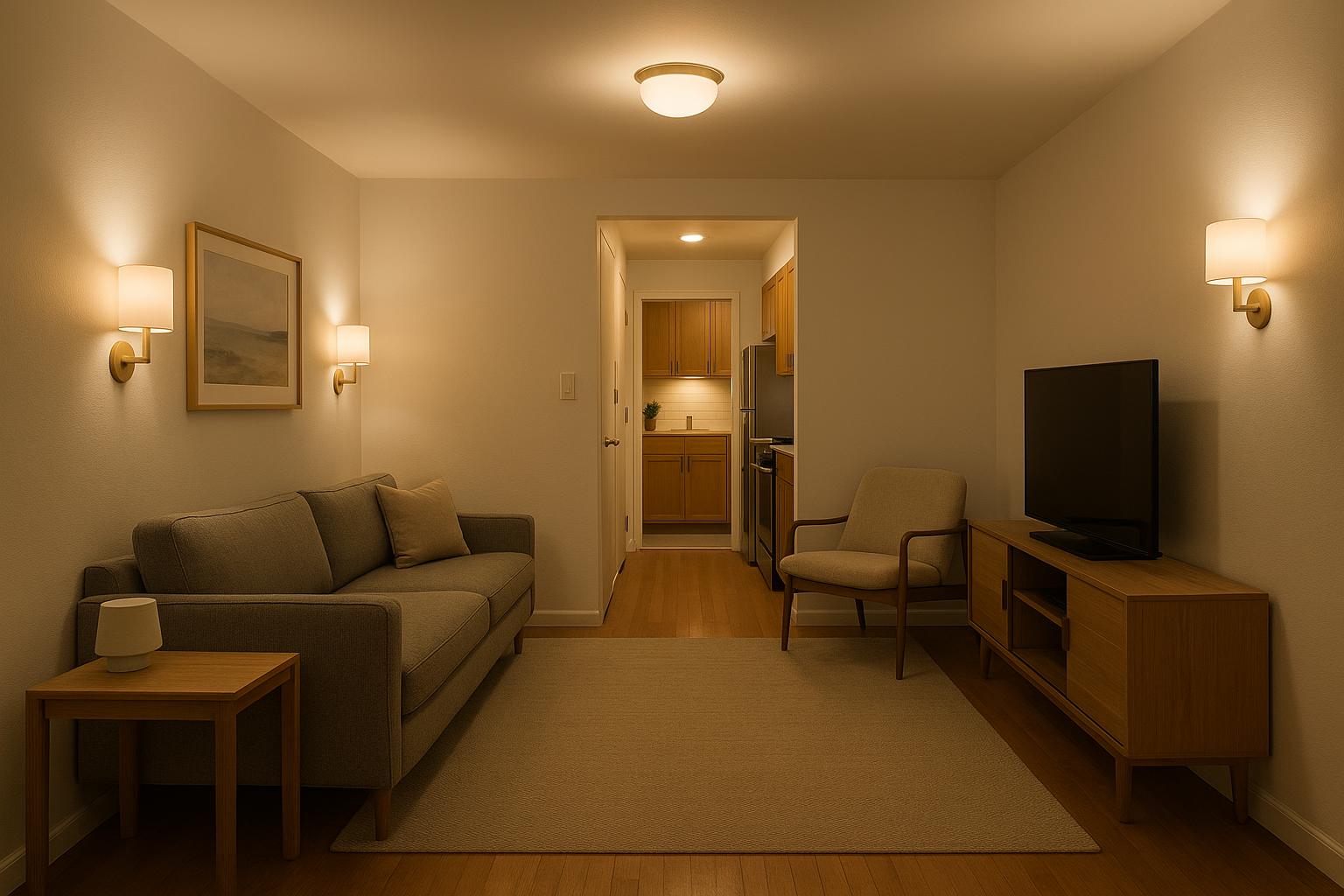
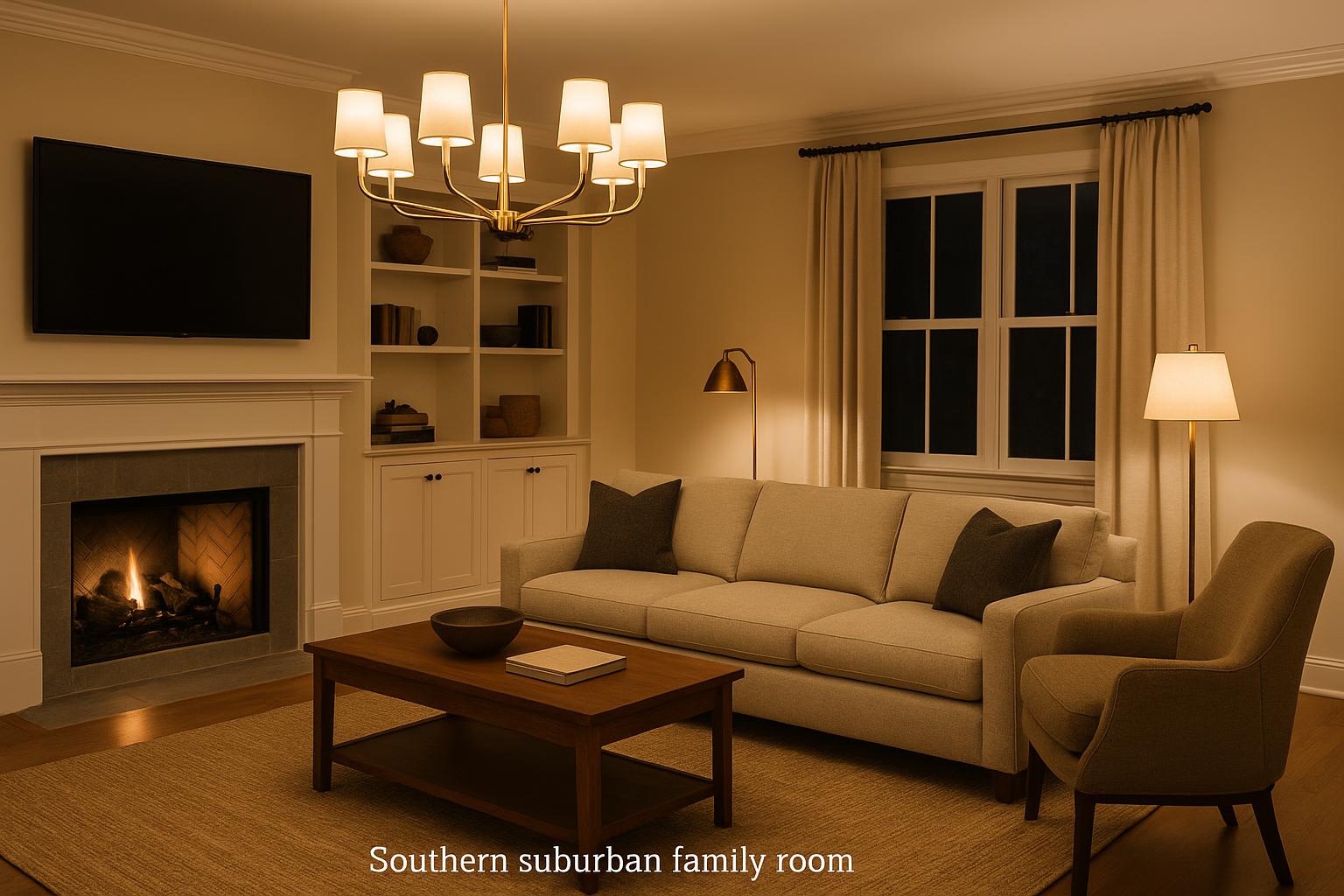
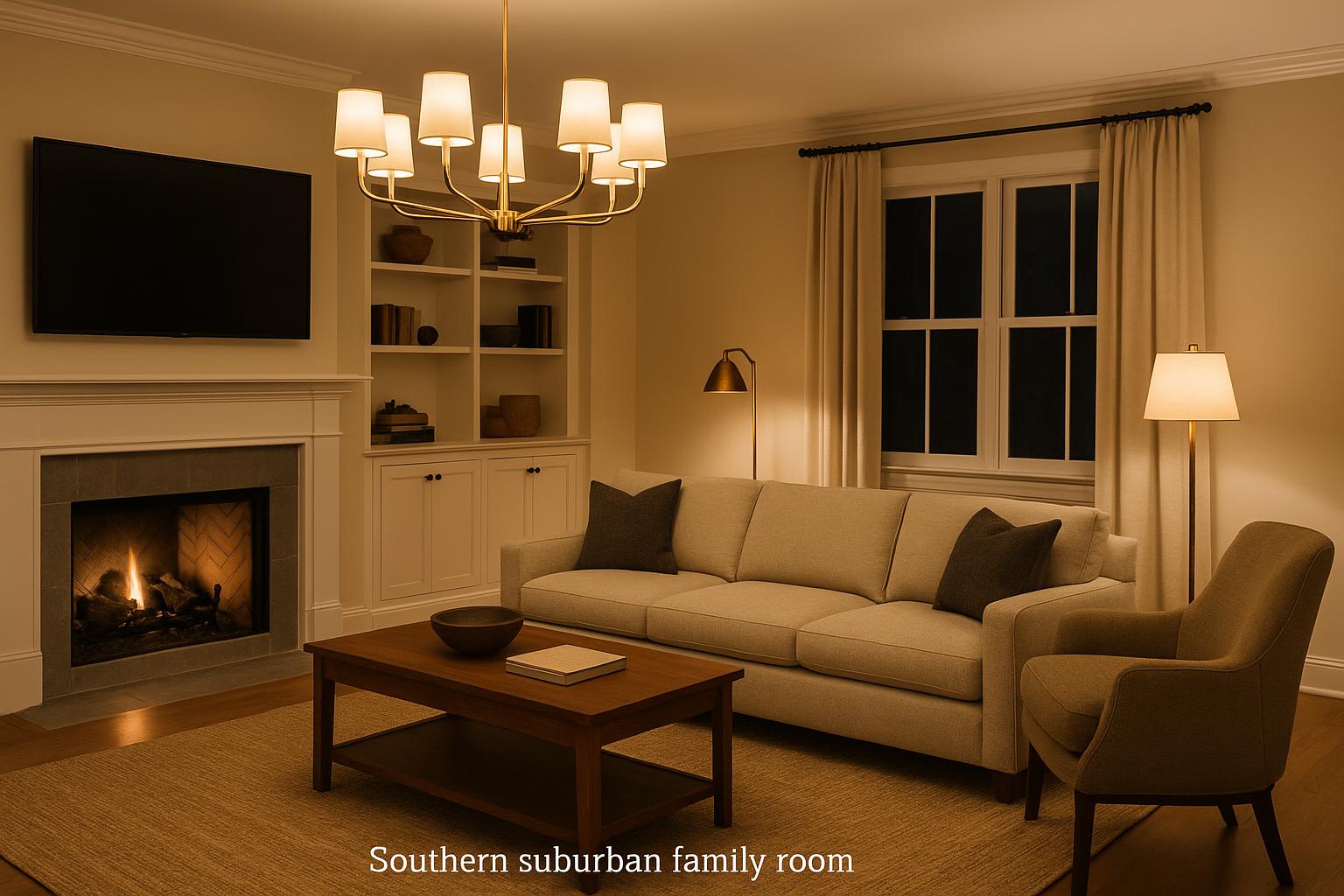
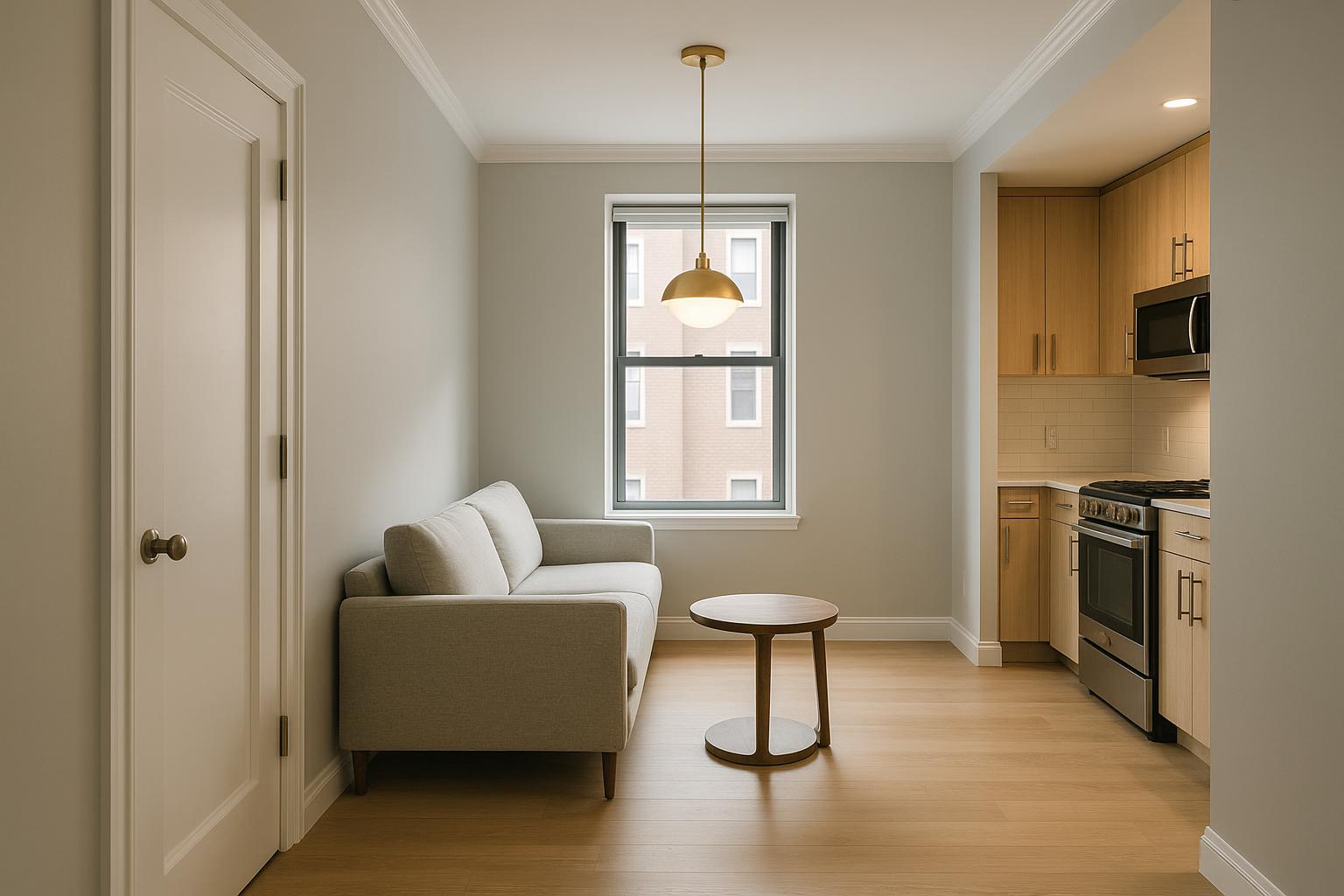
Decide which brass element deserves the strongest visual role. In a large great room, that may be a chandelier or broad pendant light centered on the seating group. In a compact New York apartment, the lead piece could be a sculptural wall sconce or an adjustable reading light rather than a ceiling fixture.
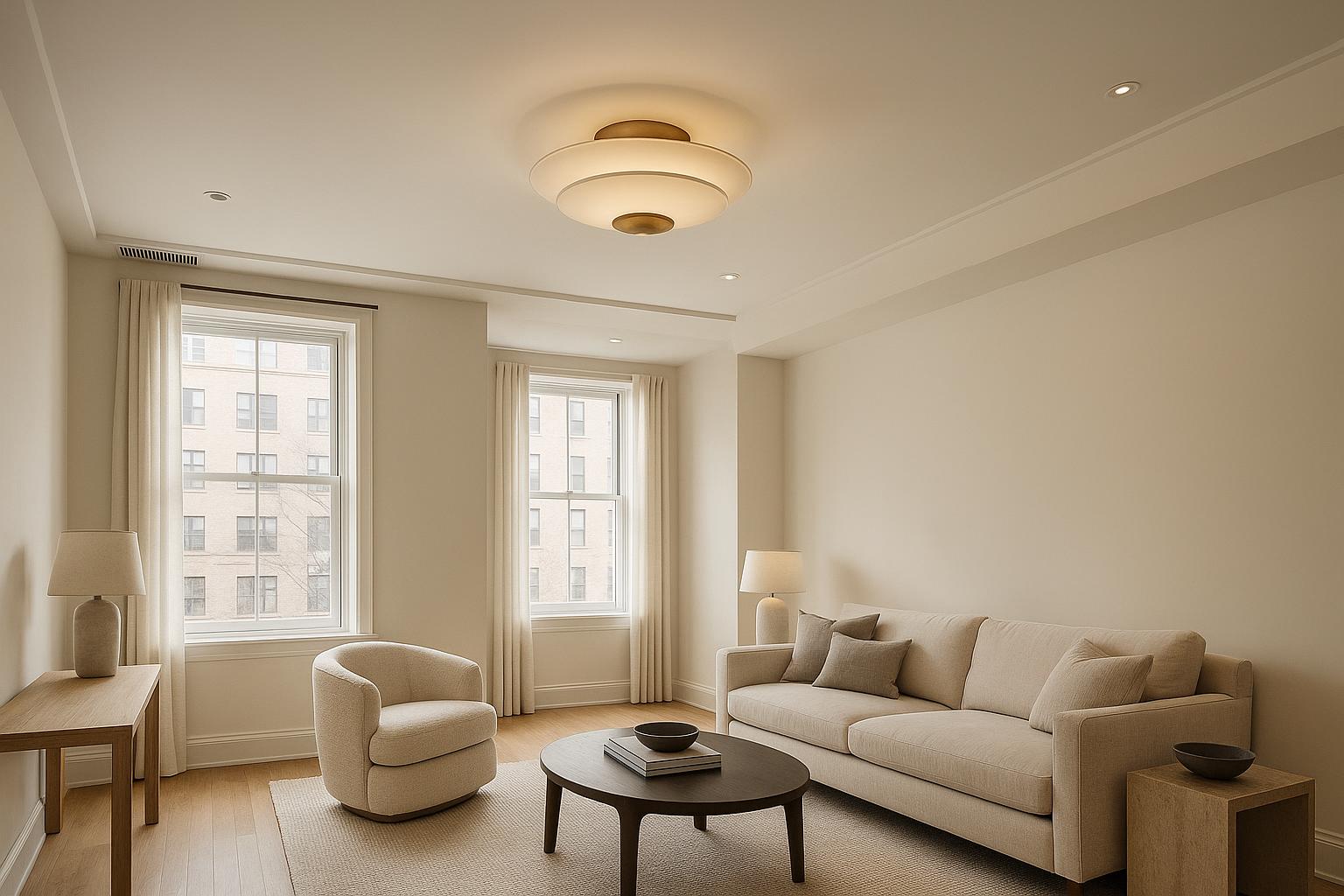
Other brass elements should be quieter in scale, silhouette, or shine. A prominent ceiling light can be supported by small sconce backplates and a restrained floor lamp. If the fireplace wall already has ornate antique brass lighting, a simple flush mount may be the better overhead choice. This hierarchy keeps the room from looking like a fixture showroom.
Distribute Light at Different Heights
A living room feels more comfortable when illumination does not come from one level. Begin overhead, continue around eye level, and finish near seated height. The source at each level does not need to be brass, but repeating the finish in two or three separated locations can make the plan feel intentional.
To complement this topic, you can also read How to Choose a Black Chandelier for Your Dining Table.
brass ceiling lights can establish broad ambient light. Wall sconces bring brightness to the perimeter and prevent the center of the room from becoming an isolated pool. A table lamp or floor lamp places useful light beside a sofa or favorite chair. Avoid arranging these elements with rigid symmetry unless the architecture calls for it. A formal mantel may suit matching sconces, while an asymmetrical reading corner usually benefits from a single directional light.
Fit the Fixture to the Ceiling and Walking Paths
Ceiling height determines which silhouettes are practical. With an 8-foot ceiling, a flush mount or shallow semi-flush mount usually preserves more open space above walking areas. Check the complete fixture height, including the canopy and any decorative stem. A wide design with a short drop can have more presence than a narrow fixture that hangs too low.
Brass pendant lights work best when furniture or architecture protects the space beneath them. A pendant can descend over a fixed side table, into the center of a seating arrangement, or through the open volume of a vaulted room. It should not hang where people routinely cross between the entryway, sofa, and kitchen.
Centering also depends on the furniture rather than the bare room. In an open-plan home, align the main light with the living area instead of the midpoint of the entire ceiling. Before ordering, consider the fixture from nearby rooms. An opaque bowl has more visual weight than an open frame of the same diameter, and a cluster of small shades can look busier than one broad diffuser.
Compare Brass Finishes in the Actual Room
Brass is a family of finishes rather than one fixed color. Polished brass reflects windows, lamps, and movement. Brushed brass scatters those reflections and tends to read more softly. Aged or antique finishes introduce darker brown tones that can sit comfortably beside old woodwork, stone, leather, or blackened metal.

View finish samples in the room during the day and after dark. Strong western daylight can intensify yellow tones, while cool northern light may make the same fixture appear muted. Warm white walls, gray paint, oak, walnut, and limestone also change how brass is perceived. An exact match with cabinet pulls or furniture hardware is unnecessary. Slight variation looks natural when the finishes share a similar degree of warmth or sheen.
Use Sconces and Task Lights Where the Room Falls Flat
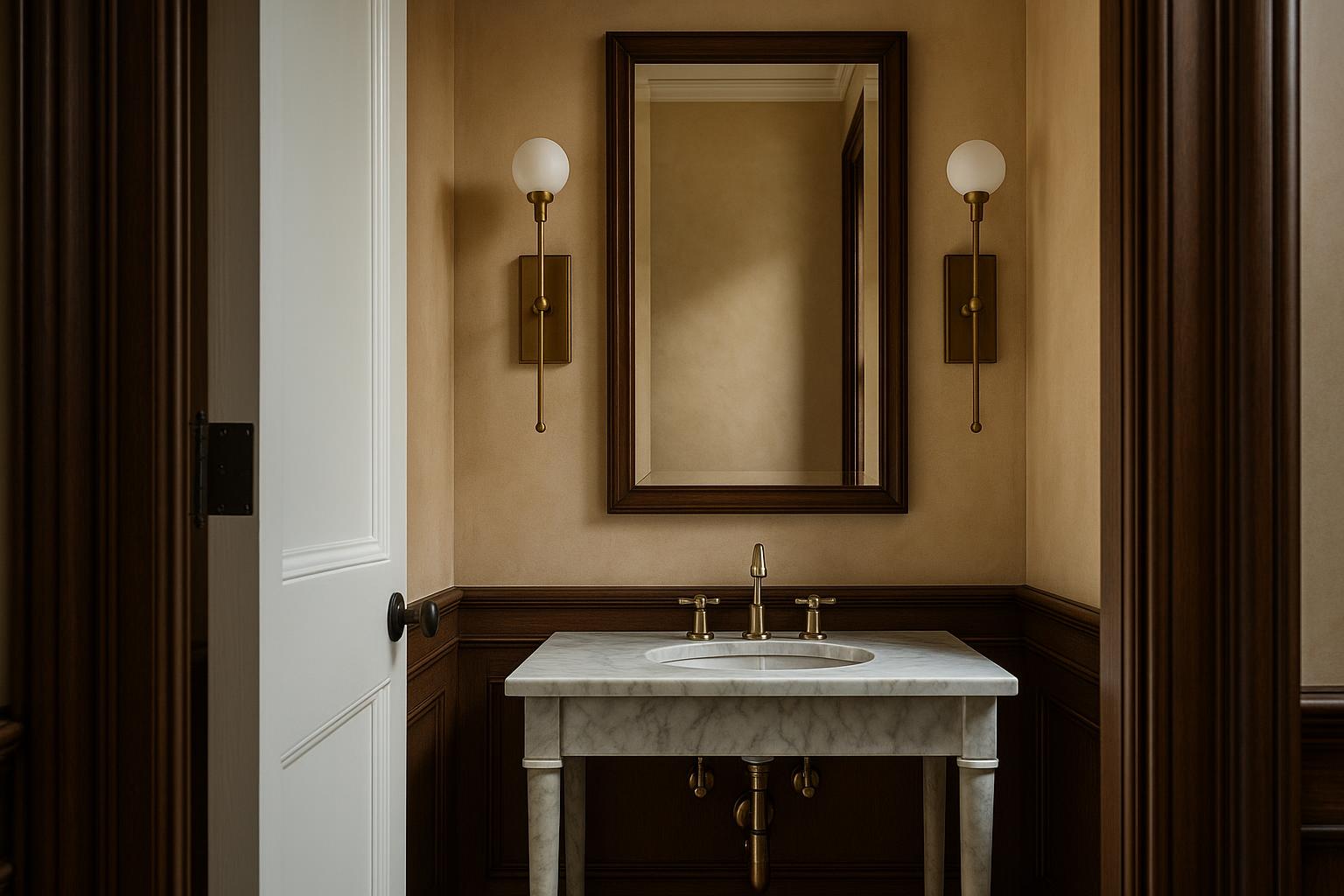
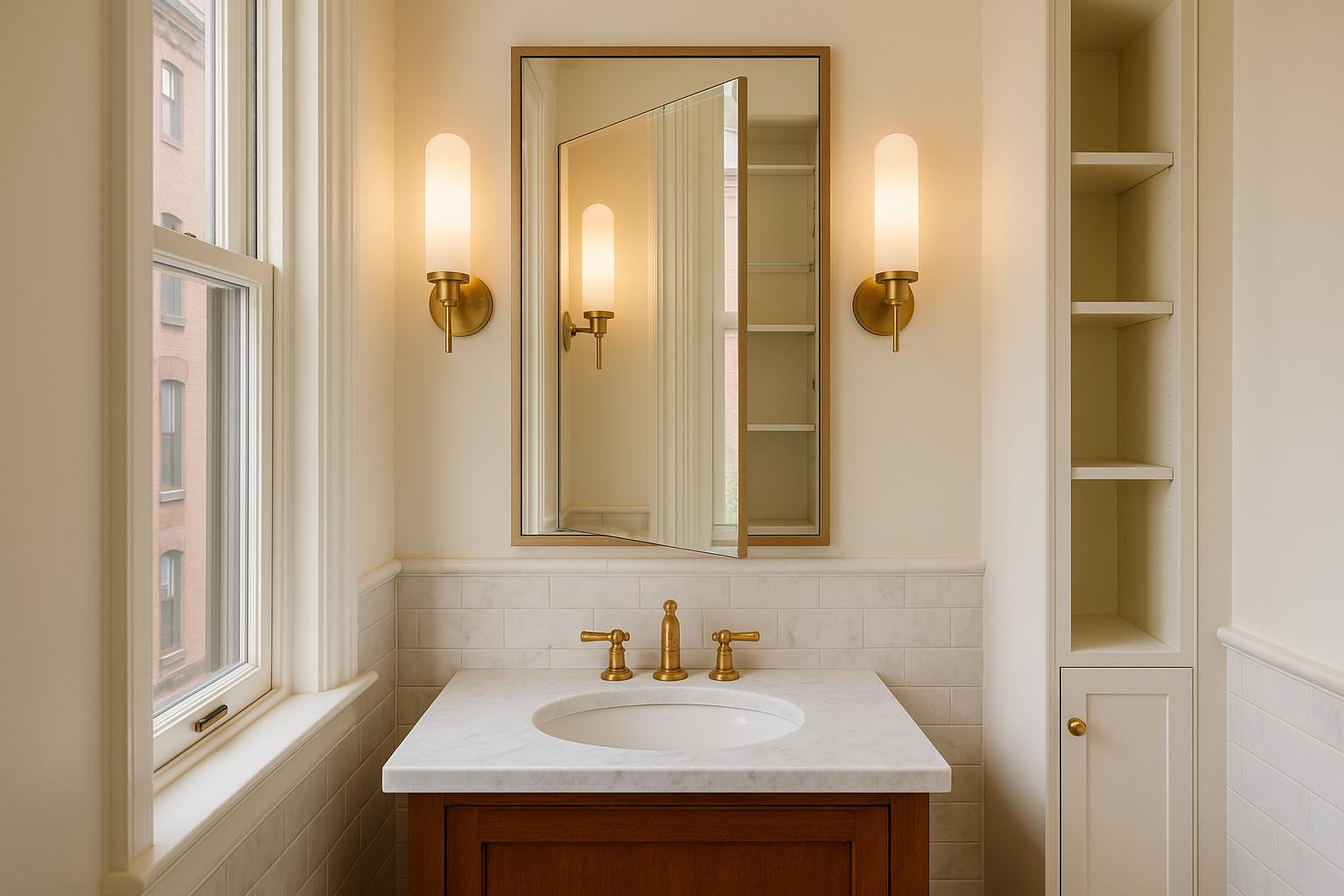
Wall lighting is especially useful in living rooms where a bright ceiling fixture leaves the edges dull. Brass wall sconces can reveal built-in shelves, frame a fireplace, give depth to paneling, or mark the transition to a hallway. Upward-facing shades can add reflected light near the ceiling, while shielded downward light is better for a reading position or display.
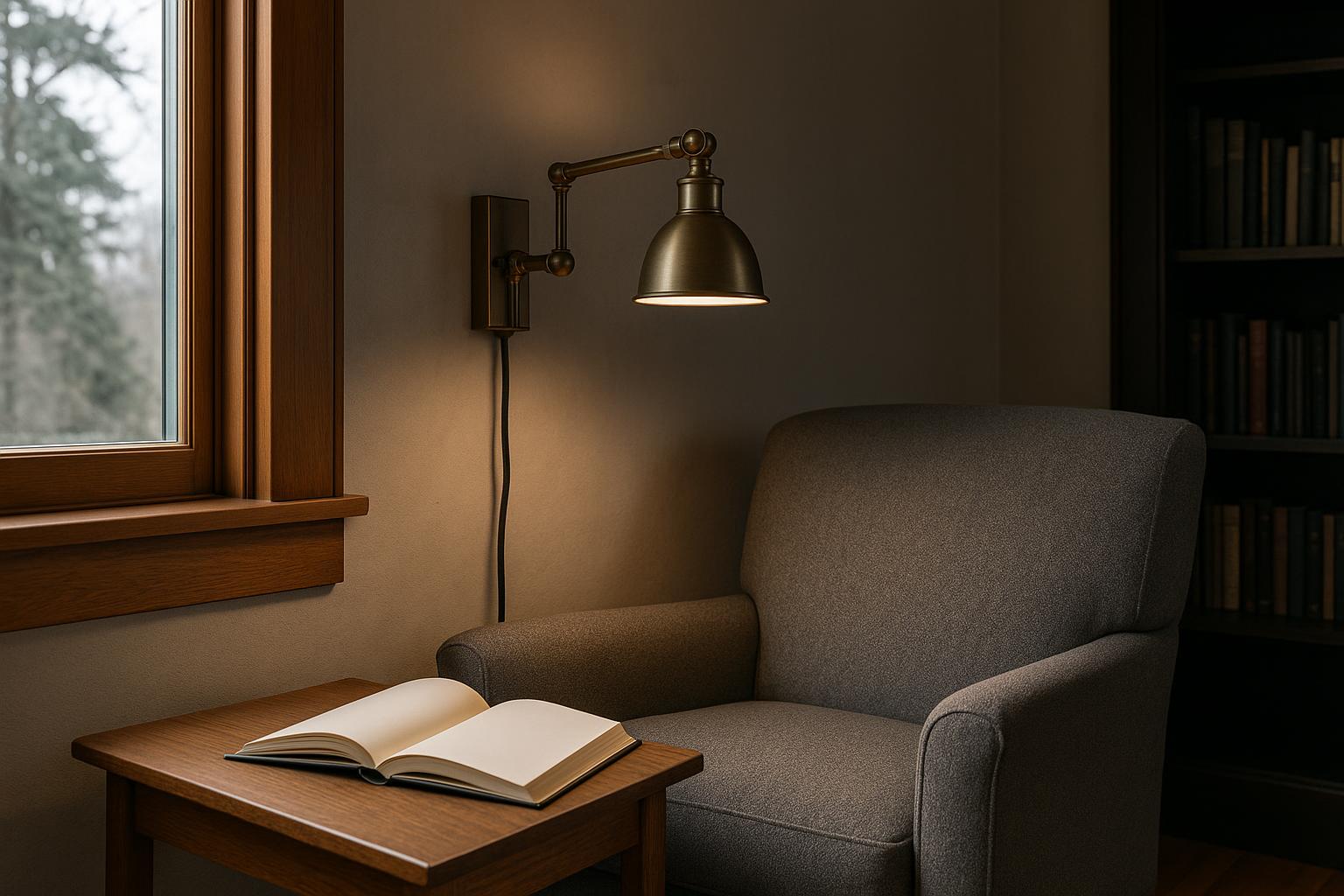
Check projection before selecting a wall fixture. An arm or shade that looks compact from the front may extend far enough to interfere with a person leaning back on the sofa. It can also narrow a passage beside furniture. If hardwiring is not practical, a plug-in swing-arm light may provide task lighting without requiring the entire furniture arrangement to revolve around a floor lamp.
Plan for Glare, Dimming, and Light Color
Evaluate every exposed lamp from seated eye level. A fixture that appears comfortable while standing may produce harsh glare from the sofa, especially when it is reflected in a television screen or dark window. Frosted glass, fabric shades, metal shielding, and built-in diffusers can soften the source when those features are part of the design.
Use separate controls for overhead, wall, and task lighting where the installation allows. Dimming provides flexibility, but the dimmer, lamp, and fixture must be compatible. Keep the apparent color of light reasonably consistent throughout the room so upholstery, paint, and brass do not shift abruptly from one pool of light to another. Product specifications should also be checked for the recommended lamp type and maximum wattage.
Mock Up the Plan Before Installation
Translate product dimensions into full-size outlines. Use removable tape on the floor to represent the width of a ceiling fixture, then look up from the entry and seating area. For a wall sconce, tape a paper template to the wall that includes the backplate, shade, and total projection. This reveals scale problems that are easy to miss on a catalog page.
- Ceiling fixtures: Check total drop, headroom, canopy size, and alignment with the seating group.
- Wall sconces: Confirm shade projection, furniture clearance, artwork edges, and access to controls.
- Pendant lights: Keep the hanging point over a fixed zone rather than a regular walking path.
- Finish samples: Compare them in daylight and under the lamps that will be used at night.
- Installation details: Review mounting requirements, fixture weight, electrical box support, and manufacturer instructions with the installer.
Make a Final Edit
Before purchasing, remove any fixture that repeats a role already covered. The room may not need brass at every height, and it rarely benefits from several equally decorative silhouettes. Keep the strongest piece, preserve useful pools of light, and let quieter fixtures connect the composition.

To compare suitable forms and finishes, browse the PureLights brass lights collection with your room measurements, ceiling height, and mock-ups nearby. Confirm product requirements before ordering, and have hardwired fixtures installed by a qualified electrician in accordance with applicable instructions and local requirements.