A mirror reveals angles that product photos and floor plans can miss. Evaluate reflected profiles, glare, fixture...
- There are no more items in your cart
- Shipping
- Total $0.00
Make the Ceiling Count: A Flush Mount With Real Presence
The ceiling is often the largest uninterrupted surface in a room, yet its light fixture may be chosen last. That is a missed opportunity. designer contemporary flush mount lights can preserve headroom while giving the ceiling a clear focal point, a useful pool of illumination, or a quiet architectural detail.
Because the fixture sits close to the ceiling, small decisions become conspicuous. An extra few inches of projection can affect clearance. A narrow diameter can look weak from the floor. A beautiful frame can disappear once its diffuser is illuminated. The best choice accounts for the fixture as an object, a light source, and part of the ceiling plane.
Decide what the ceiling needs
Survey the whole ceiling before opening a product catalog. Note its height, finish, beams, soffits, vents, recessed lights, and electrical-box location. Then consider how the room is actually arranged below it. The center of the ceiling may not be the visual center if a seating group, kitchen island, or bed sits off axis.

A fixture can recede into a low white ceiling or create contrast against it. It might also supply a shape that the room lacks. A dark ring can sharpen a plain new-build entryway, while a softly curved opal shade can ease the hard lines of a compact kitchen. If the existing electrical box forces an awkward placement, discuss relocation with a qualified electrician rather than expecting the fixture to correct the imbalance.
Set a projection limit
Projection is the distance from the ceiling to the fixture's lowest point. Measure it against the real conditions in the room, especially with an 8-foot ceiling. Check open doors, tall cabinets, bunk beds, exercise equipment, and paths used to move furniture or storage bins.
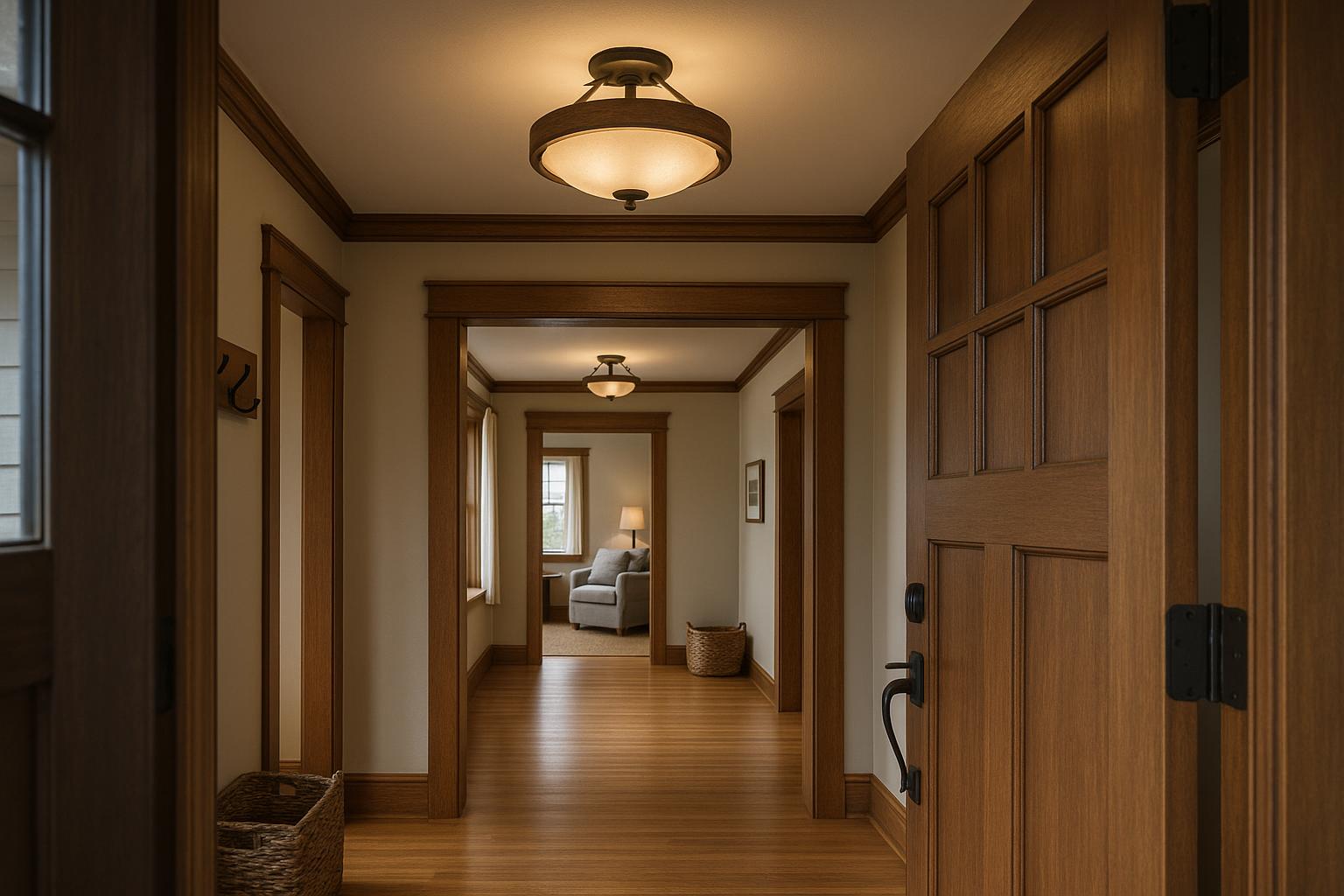
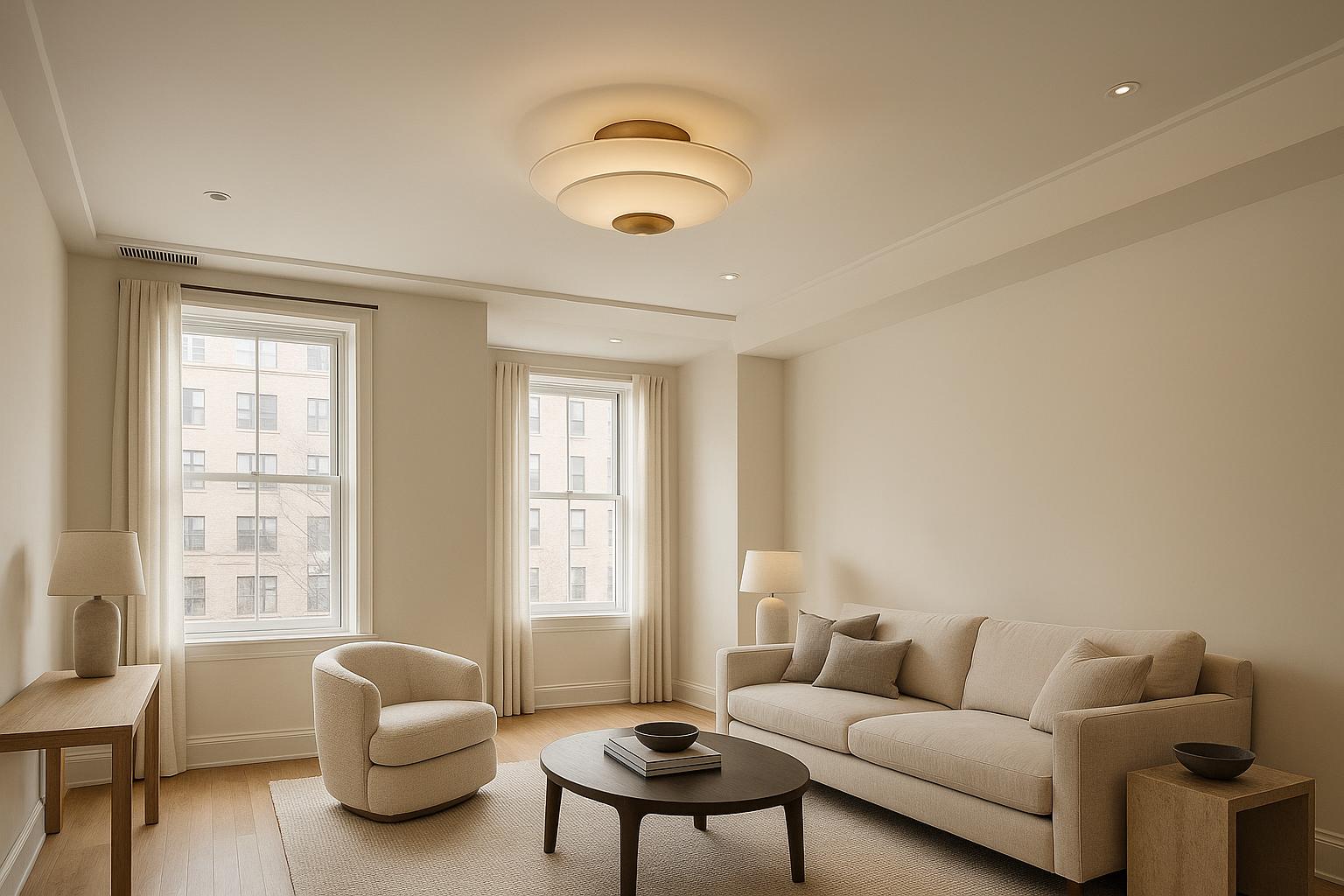
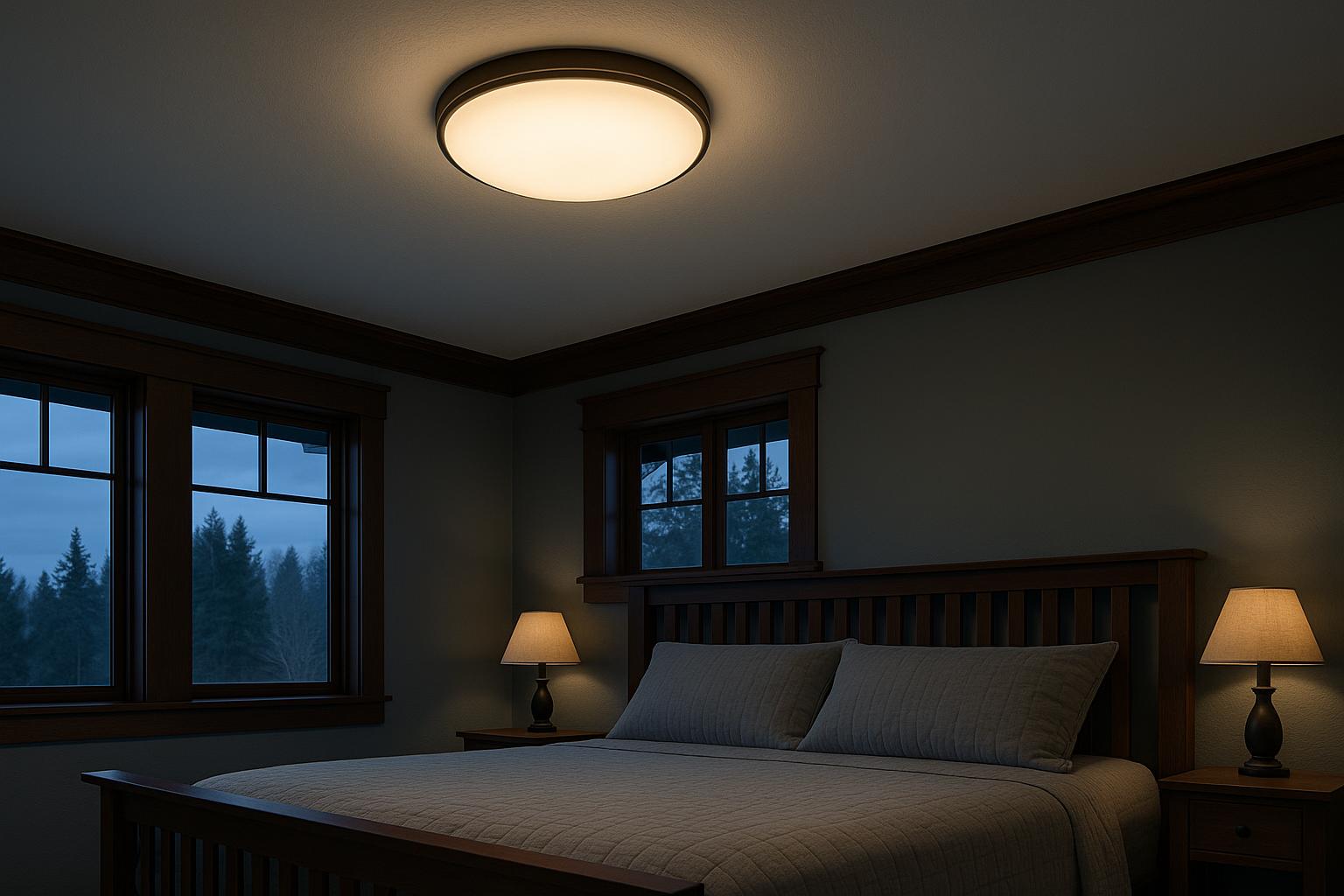
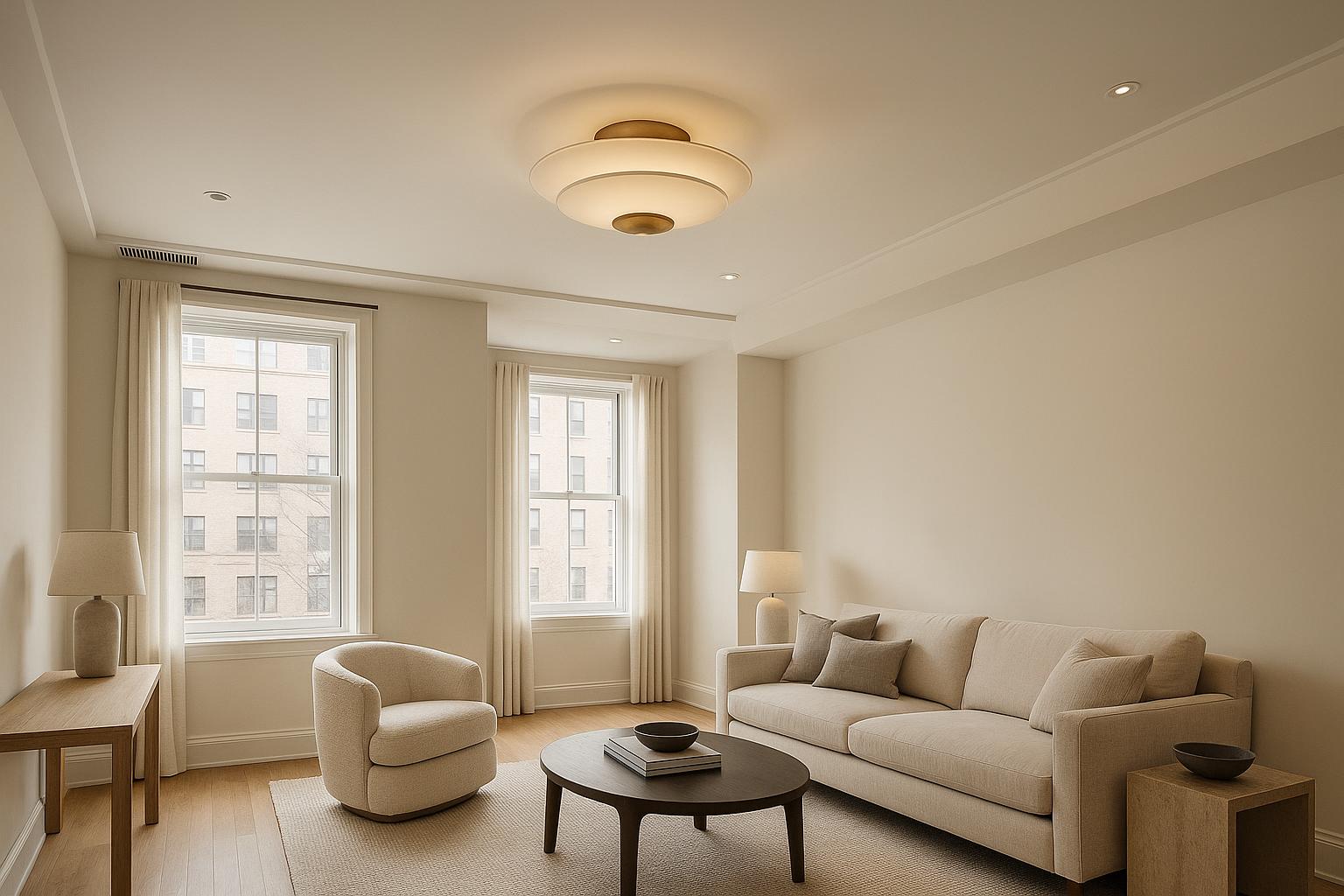
Low profile ceiling lights are helpful where every inch matters, but extremely thin is not always visually stronger. A shallow drum, stepped disc, or layered ring can create a slim shadow line that gives the form definition. In a dark basement with soffits, a flatter fixture may keep the ceiling from feeling more fragmented. In a bedroom or entryway, a little depth may make the light feel intentional rather than purely utilitarian.
Use the listed overall height, not the apparent depth in a styled photograph. Canopies, frames, decorative caps, and diffusers may extend below the main body.
Test the footprint from below
Width usually carries more visual weight than height in a flush mount. A fixture that appears substantial in a close-up image can look undersized once it is placed on a broad ceiling. The opposite problem occurs when a thick dark border dominates a narrow hallway or small office.
Make a full-size paper or cardboard template and attach it temporarily with ceiling-safe tape. View it from the doorway, the main seat, and any adjoining room. A tape measure provides a number; a template shows how much ceiling the fixture actually occupies.
To complement this topic, you can also read Plan Bathroom Wall Sconces Around the Mirror.
- Bedroom: Judge the fixture in relation to the bed and visible floor area, not empty corners behind furniture.
- Hallway: Consider a measured sequence of smaller fixtures if one central light leaves the corridor visually uneven.
- Family room: Relate the diameter to the seating group. A wide ceiling may need more visual weight even when recessed lights provide most of the illumination.
- Entryway: Check the view from the front door and nearby rooms. An open stair or closet should not falsely enlarge the area the fixture must anchor.
Evaluate the fixture with the light on
The frame determines the silhouette when the fixture is off; the diffuser often determines what you notice after dark. Opal glass, frosted acrylic, exposed bulbs, clear elements, and edge-lit panels can produce very different impressions inside similar outlines.
A broad diffused surface can appear calm and evenly luminous. Visible points of light add sparkle but may be uncomfortable from a bed, sofa, or upper stair landing. Look for illuminated product images taken from below as well as straight-on photographs. Pay attention to bright rims, dark centers, shadows inside the shade, and whether individual LEDs or bulbs remain visible.

Material appearance can also change when illuminated. A diffuser that seems solid white while off may become the fixture's dominant visual feature when on. Judge both states because the light must belong in the room during daylight as well as at night.
Connect geometry and finish to the room
modern flush mounts include more than plain circular panels. Rounded squares, offset rings, intersecting bars, shallow drums, and asymmetrical planes can all work, provided their geometry has a relationship to the architecture.
A rectilinear design can pick up cabinet runs, window grids, or long hallway sightlines. Curves can soften a room filled with square doorways and blocky furniture. Repetition does not need to be literal. A round fixture can suit a rectangular room when its finish, proportion, or visual weight connects it to nearby elements.
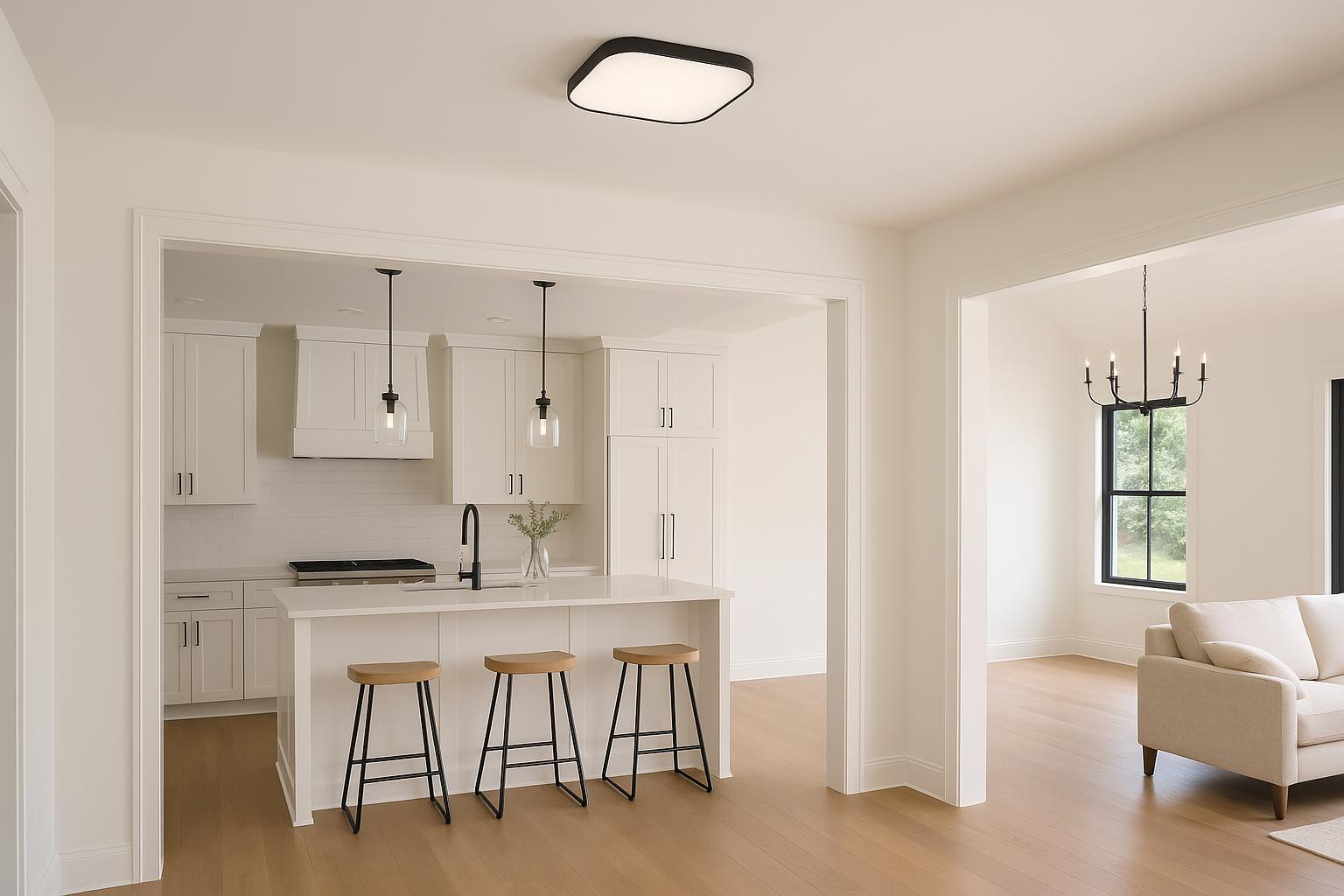
Finish behaves differently overhead than it does at eye level. Matte black forms a crisp outline against a pale ceiling. White reduces contrast. Warm metal may catch daylight and coordinate with hardware without matching it exactly. Reflective finishes reveal more highlights and may call greater attention to irregular ceiling texture.
In the same direction, Place Living Room Sconces From the Seat Out offers useful ideas for choosing home lighting more confidently.
Treat the flush mount as one layer of light
A ceiling fixture does not need to perform every lighting task. In a home office, it can provide ambient light while a desk lamp handles close work. In a kitchen, it may soften gaps between under-cabinet lighting, recessed lights, and pendants. In a bedroom, comfort while reclining matters as much as brightness while dressing.
For LED flush mount lights, compare the product-specific lumen output, color temperature, color rendering information, and dimming requirements. Confirm whether the design uses replaceable bulbs, replaceable LED components, or a nonreplaceable integrated light source. A slim profile can be appealing, but future service should be part of the purchase decision.
If dimming is important, verify compatibility among the fixture, bulbs or driver, and wall control. Do not assume that every LED fixture works smoothly with an existing dimmer. Strong daylight in a California ranch house and limited daylight in a basement create different demands, so controls can be as important as maximum output.
Coordinate open spaces by role
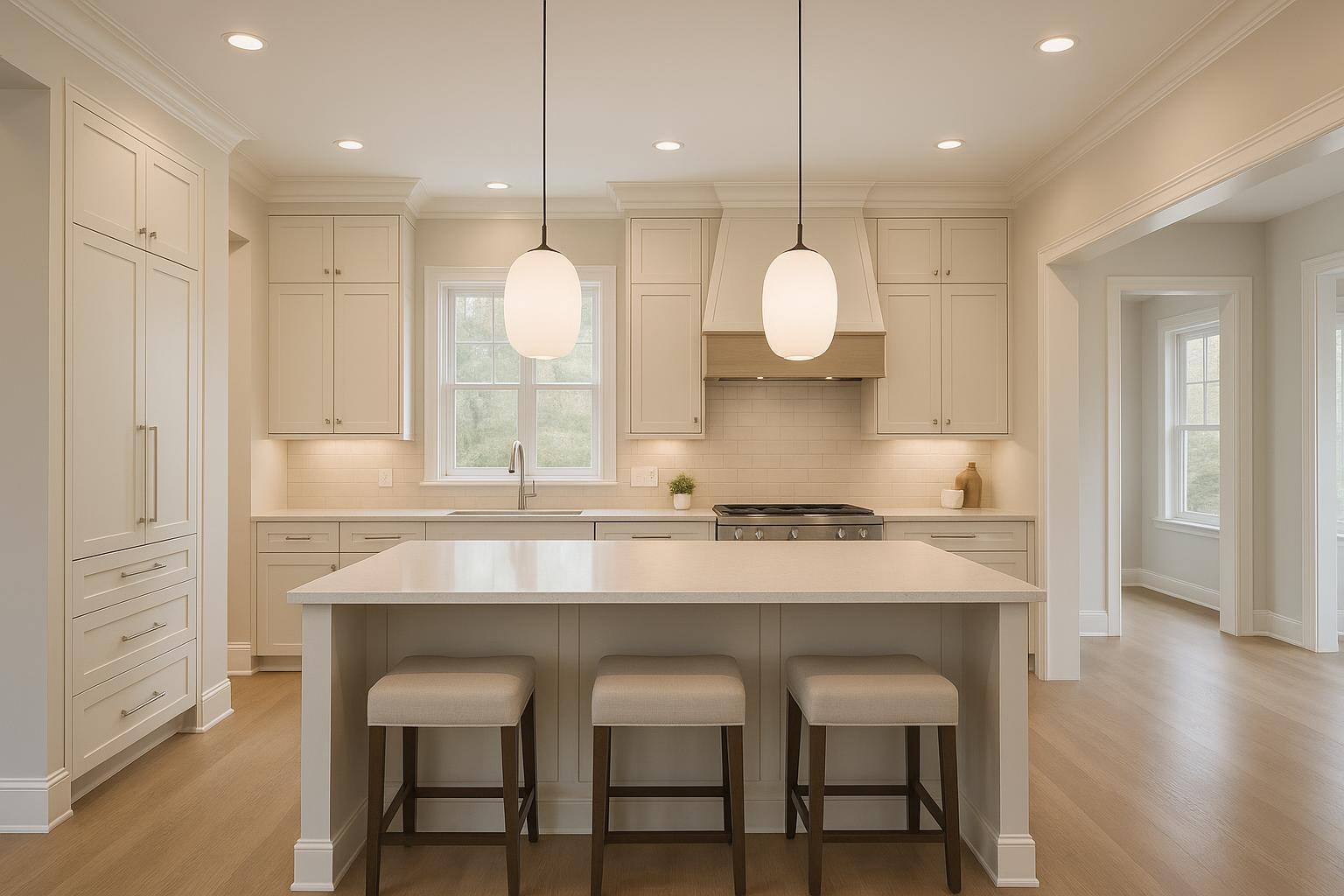
An open plan may include island pendants, recessed lights, a dining fixture, and a flush mount within one view. They do not need to come from the same collection. A more convincing plan gives each fixture a role.

Let the principal pendant light or chandelier carry the strongest silhouette. A nearby flush mount can remain quieter while repeating one characteristic, such as a black rim, rounded diffuser, or warm metal accent. This is especially useful where an 8-foot kitchen ceiling opens to a taller family room. The close-to-ceiling fixture can mark the lower zone without competing with the feature light beyond it.
For more consistent lighting throughout the home, the article How to Layer Brass Lighting Without Making the Living Room Matchy may also be helpful.
Read the specifications before ordering
Confirm the overall width and height, canopy dimensions, fixture weight, mounting method, and electrical requirements. Check whether the electrical box is positioned and rated appropriately for the installation. If the ceiling slopes, use only a fixture specifically approved for that condition.
- Location rating: Bathrooms, covered patios, and other damp or wet areas require a fixture rated for the intended environment.
- Access: Consider how the diffuser is removed, how bulbs or components are serviced, and whether installation requires room around the fixture.
- Maintenance: Layered open frames may hold more dust than an enclosed shade. Kitchen fixtures may also need more frequent cleaning.
- Controls: Verify switching, dimming, driver, and bulb compatibility before installation.
Follow the manufacturer's instructions and use a licensed electrician for electrical work. Product photographs cannot establish mounting suitability, location rating, or compatibility with the conditions in a particular home.
Make the final choice in the room
Return to the ceiling template and compare the finalists by projection, footprint, diffuser, finish, output, and serviceability. The successful fixture should look balanced from ordinary viewing positions, remain comfortable when illuminated, and support the other lighting rather than duplicate it.
PureLights offers a range of contemporary flush lights with varied profiles, materials, and silhouettes. Browse with your measurements, ceiling photographs, and viewing angles nearby so the room remains more persuasive than the product close-up.
A flush mount has presence when its scale and light quality feel settled, not showy. It protects the space overhead while making the ceiling look finished on purpose.