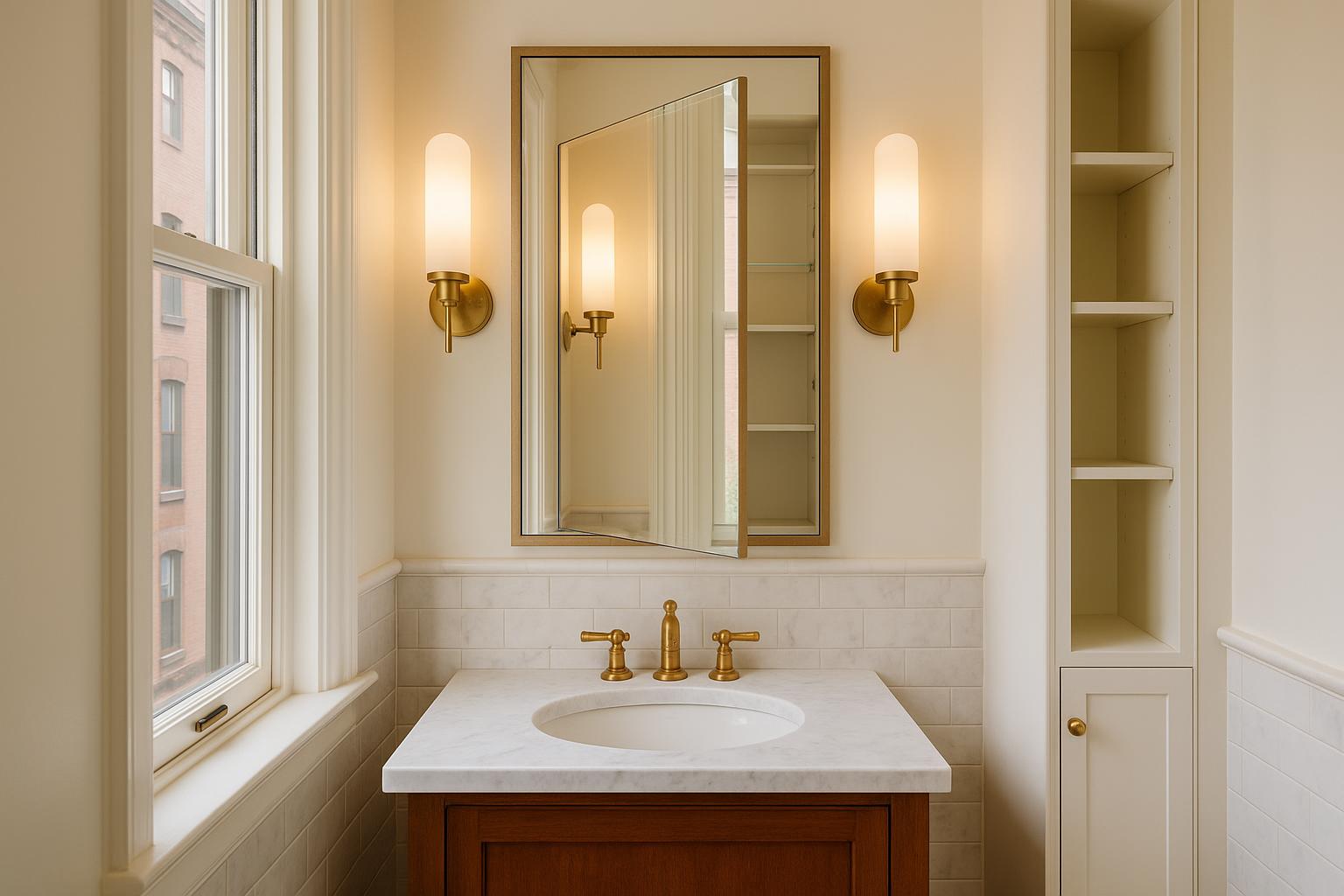
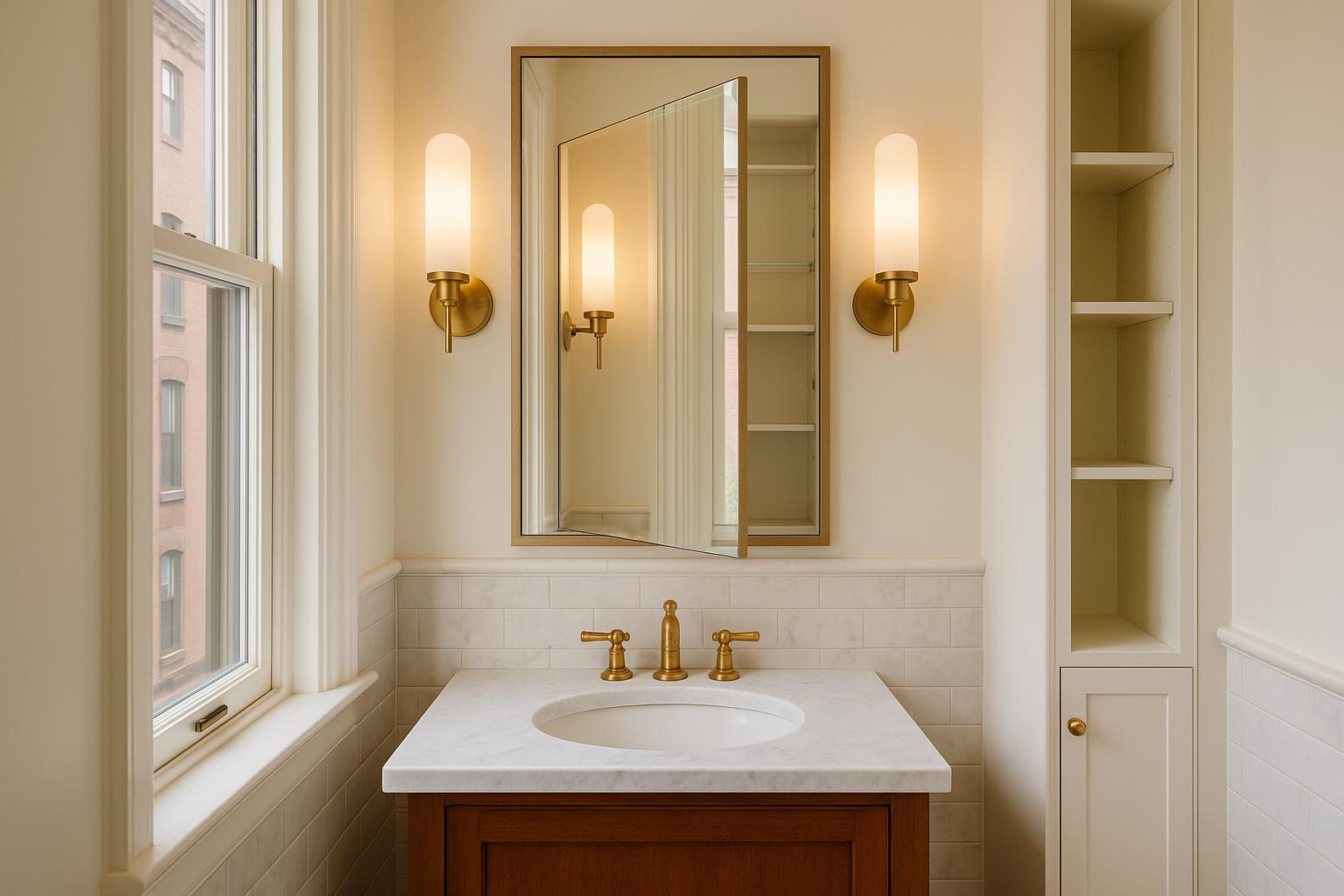
A mirror reveals angles that product photos and floor plans can miss. Evaluate reflected profiles, glare, fixture...
- There are no more items in your cart
- Shipping
- Total $0.00
Plan Bathroom Wall Sconces Around the Mirror
A bathroom can feel bright while the mirror remains frustrating to use. A ceiling fixture may illuminate the floor and countertop, yet leave shadows beneath the eyes and chin. An exposed bulb beside the mirror can create the opposite problem: plenty of light, but too much glare at eye level.
The better starting point is the reflection. bathroom wall sconces should help a person see clearly at the sink without turning the vanity into the brightest, harshest surface in the room. Their position, size, and shade matter as much as their appearance. Once the mirror zone works, ceiling light can support the rest of the bathroom.
Measure the working area around the mirror
Treat the mirror, sink, counter, and nearby storage as one working area. Record the mirror width and height, the distance from the counter to the mirror, and the available wall space on each side. Note any backsplash, outlet, trim, window casing, or tall cabinet that limits placement.

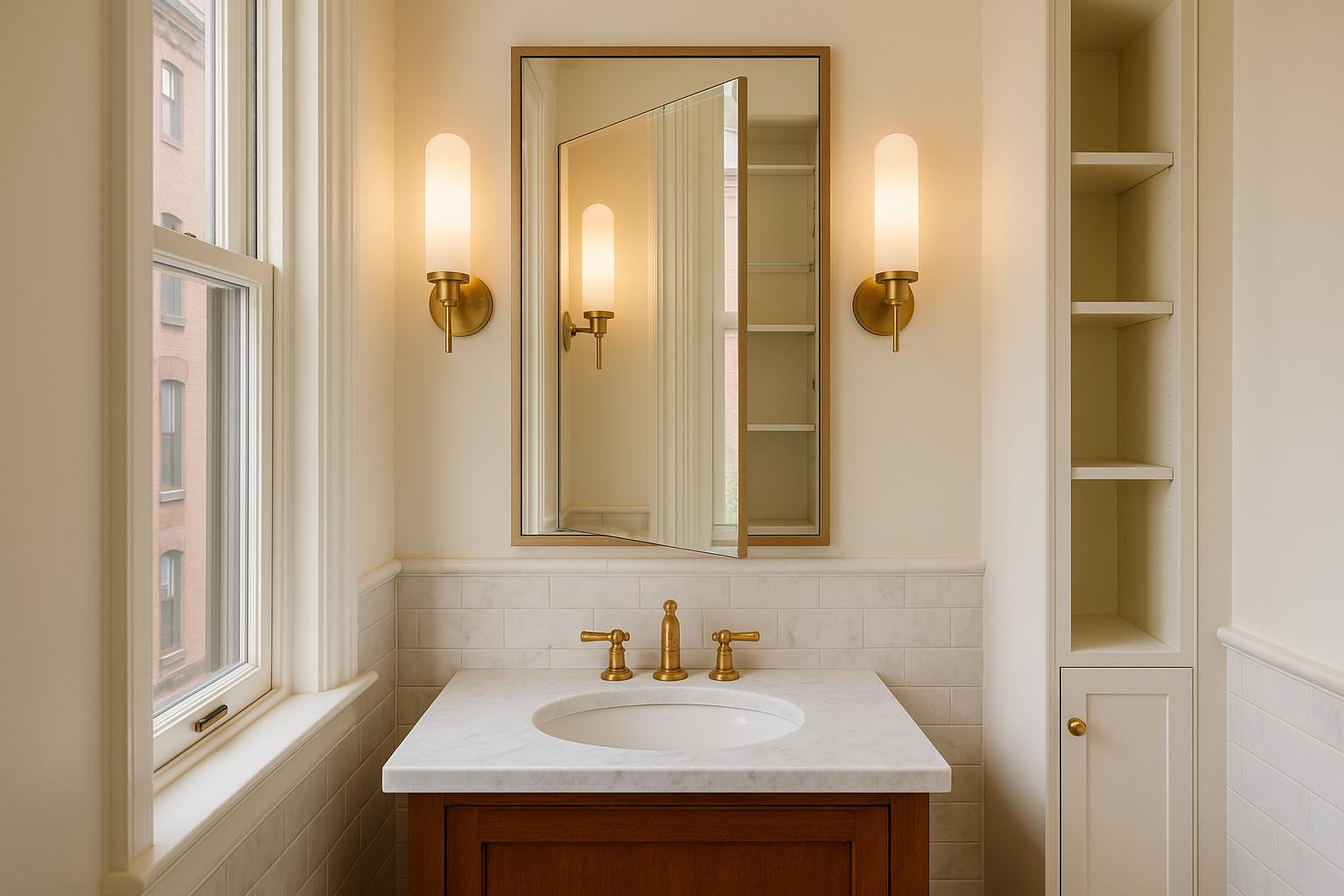
Depth deserves attention too. A medicine cabinet door may swing into a sconce that looks comfortably separated in a front-view drawing. Deep shades can crowd a narrow vanity or appear prominently in the mirror. If the fixture will sit beside a recessed cabinet, open the door fully and measure the actual clearance before settling on a location.
The wall arrangement usually points toward the most practical format. A tall mirror with open wall space on both sides is well suited to a pair of vertical sconces. A wall-to-wall mirror or a compact powder room may leave room only for a vanity light above the glass. Two separate mirrors over a double vanity can support paired fixtures, while one broad shared mirror may require a different composition.
Choose where the light should come from
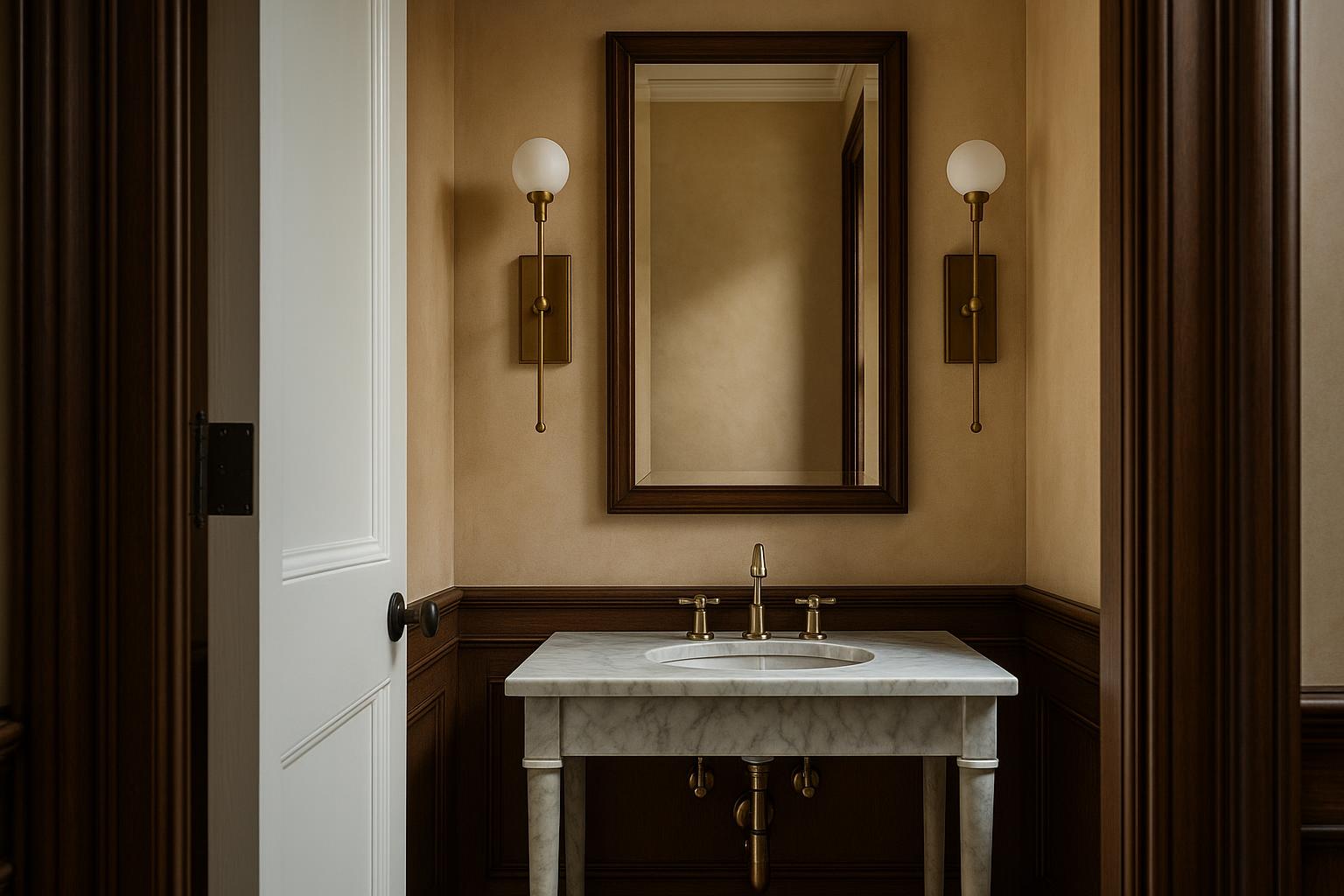
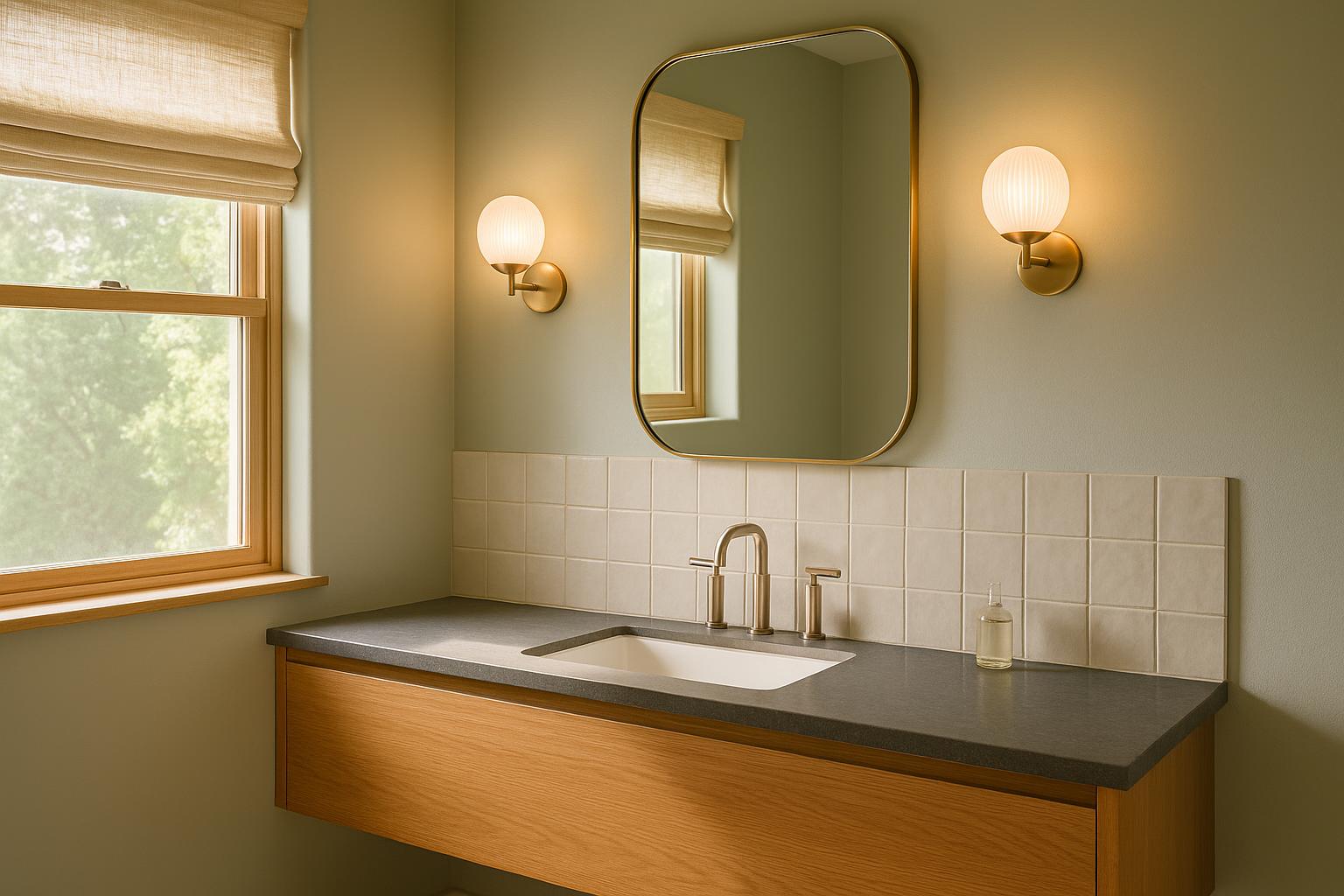
Light arriving from both sides of the face generally produces a more balanced reflection than light coming only from overhead. For that reason, paired bathroom wall sconces are often the strongest choice for shaving, makeup, skin care, and other close work. Long or vertically oriented shades can spread light across a larger portion of the face than small decorative bulbs.
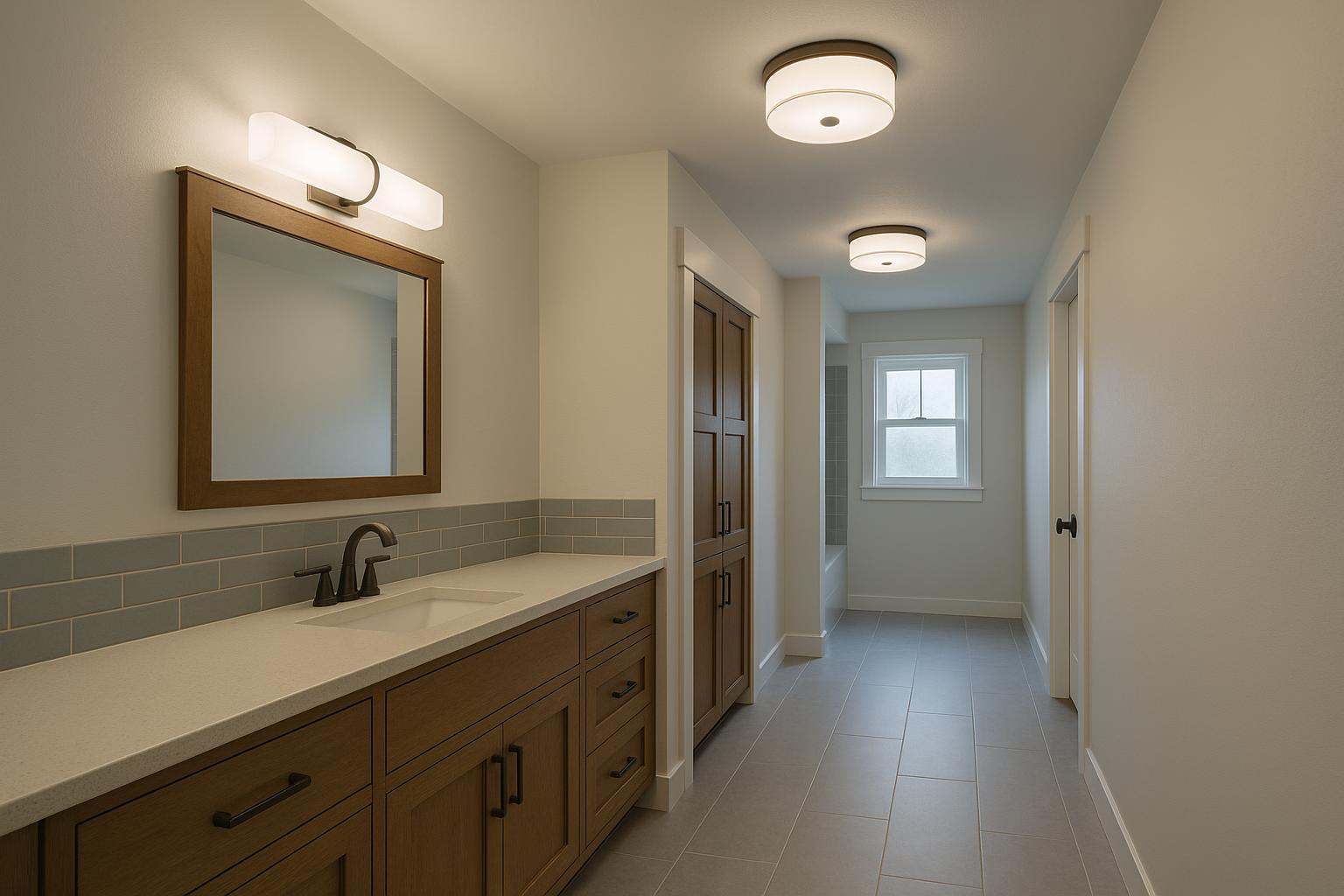
An above-mirror fixture remains useful when the sides are blocked by cabinetry, tile details, or adjacent walls. Choose a design that spreads light across the vanity rather than concentrating it in one bright point. On a broad mirror, a fixture that is visually substantial enough to relate to the glass will usually look more deliberate than a very short bar centered over a large expanse.
Some layouts benefit from both side and upper light, but adding fixtures should solve a real coverage problem. More sockets do not automatically create a better reflection. A double vanity with separate mirrors may need an outer sconce on each side and a shared fixture between them. A smaller vanity may become cluttered with the same arrangement.
To complement this topic, you can also read Place Living Room Sconces From the Seat Out.
Lighted mirrors can also serve this role. Evaluate mirror lights by the width and direction of their illuminated area, not simply by the clean appearance of the glass when switched off.
Check fixture scale, depth, and clearance
Fixed mounting formulas can be misleading because users, mirrors, and fixtures vary. Instead of aligning every sconce with the top of the mirror, consider where the light-producing portion will sit relative to the faces of the people who use the bathroom most often. The fixture body, backplate, and shade may each have a different center.
Make paper templates using the listed fixture dimensions and tape them to the wall. View them from the doorway, from the sink, and in the mirror. This quick mock-up reveals whether the sconces feel pinched against the frame, too close to a side wall, or visually disconnected from the vanity.
For an upper vanity light, check the gap between the mirror and the fixture as well as the distance to the ceiling. In a bathroom with an 8-foot ceiling, a tall decorative fixture can make the wall feel crowded even when it technically fits. A low-profile design may preserve a cleaner relationship among the counter, mirror, and ceiling.
Also confirm that shades can be removed, bulbs can be changed if applicable, and the mirror can be cleaned without awkward obstructions. These practical clearances are easy to miss in a product photograph.
Make the light comfortable at eye level
A bathroom sconce is viewed from close range and often appears again in the mirror. Clear glass and exposed bulbs can create sharp points of brightness, especially when mounted beside the face. Opal, frosted, ribbed, or otherwise diffusing shades tend to soften the source, although the result still depends on the fixture design and lamp.

In the same direction, How to Layer Brass Lighting Without Making the Living Room Matchy offers useful ideas for choosing home lighting more confidently.
Review the listed light output, color temperature, and color-rendering information when available. The goal is enough useful light to see detail without washing out the room. Consistency also matters. If the sconces appear warm while a nearby flush mount looks noticeably cool, skin tones and finishes can shift as a person moves through the space.
Dark tile, deep paint, and matte surfaces absorb more light than pale glossy finishes. Strong daylight can create another challenge. In a bathroom with a bright side window, the electric light may need to balance daytime contrast rather than overpower it. Consider the room after sunset as well; a layout that relies heavily on a window can feel very different at night.
Give bathroom ceiling lights a separate job
The vanity layer does not need to illuminate the shower entrance, toilet area, linen cabinet, and every corner of the floor. Bathroom ceiling lights are better positioned to provide wider ambient coverage and make circulation comfortable.
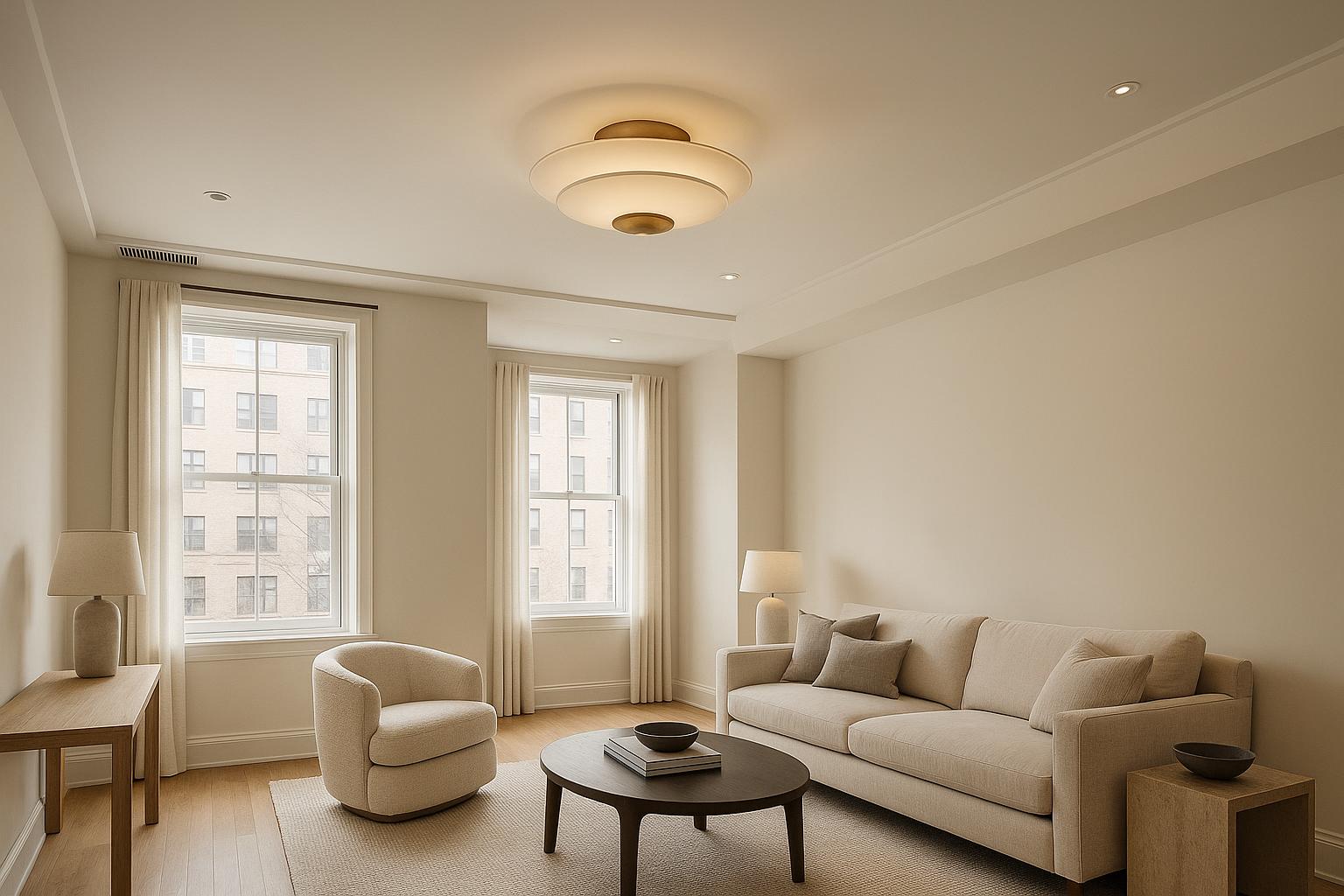
A flush mount can keep an 8-foot ceiling visually open. A semi-flush mount may work where there is more headroom and the fixture will not interfere with doors or sightlines. Recessed lights can help distribute illumination through a long bathroom or a dark basement bath, but their placement should support the room rather than cast strong downward shadows at the mirror.
Look for obvious gaps between the vanity and the rest of the space. A long primary bathroom may need ceiling coverage near the entry and bathing area instead of one bright fixture centered over the sink. Keeping the roles distinct makes it easier to adjust the room without overlighting the mirror.
For more consistent lighting throughout the home, the article How to Choose a Black Chandelier for Your Dining Table may also be helpful.
Coordinate controls, ratings, and wiring
Separate controls for wall and ceiling fixtures make the bathroom more flexible. The sconces may be sufficient for an early morning visit, while the full lighting plan can be used for cleaning or detailed grooming. If dimming is desired, verify compatibility among the fixture, bulb or integrated light source, dimmer, and other controls before purchase.
Confirm the manufacturer's stated location rating and installation instructions for every light fixture. Suitability can depend on where the fixture is installed and whether it may be exposed to moisture or direct water. Do not assume that every decorative wall sconce belongs near a tub or shower.
Electrical box locations often determine whether an otherwise attractive layout is feasible. Moving a box or adding a switch can affect tile, drywall, cabinetry, and the mirror order. Resolve those details before finished surfaces are installed. Permanent wiring should be handled by a licensed electrician who can evaluate box support, circuit conditions, applicable code requirements, and the specific bathroom layout.
Review the complete plan before buying
Stand back and read the vanity wall as a whole. Confirm the mirror dimensions, open-wall width, fixture depth, door swings, shade clearance, light direction, finish, and control plan. Then check how the ceiling fixture carries light beyond the sink. A good plan should work from the doorway, at the mirror, and after dark.

When the measurements and lighting roles are clear, browse bathroom lights for the vanity and ceiling. Keep the wall dimensions nearby and compare them with the complete fixture specifications. The right choice should do more than cover an electrical box: it should make the mirror comfortable to use and leave the wider bathroom evenly supported.