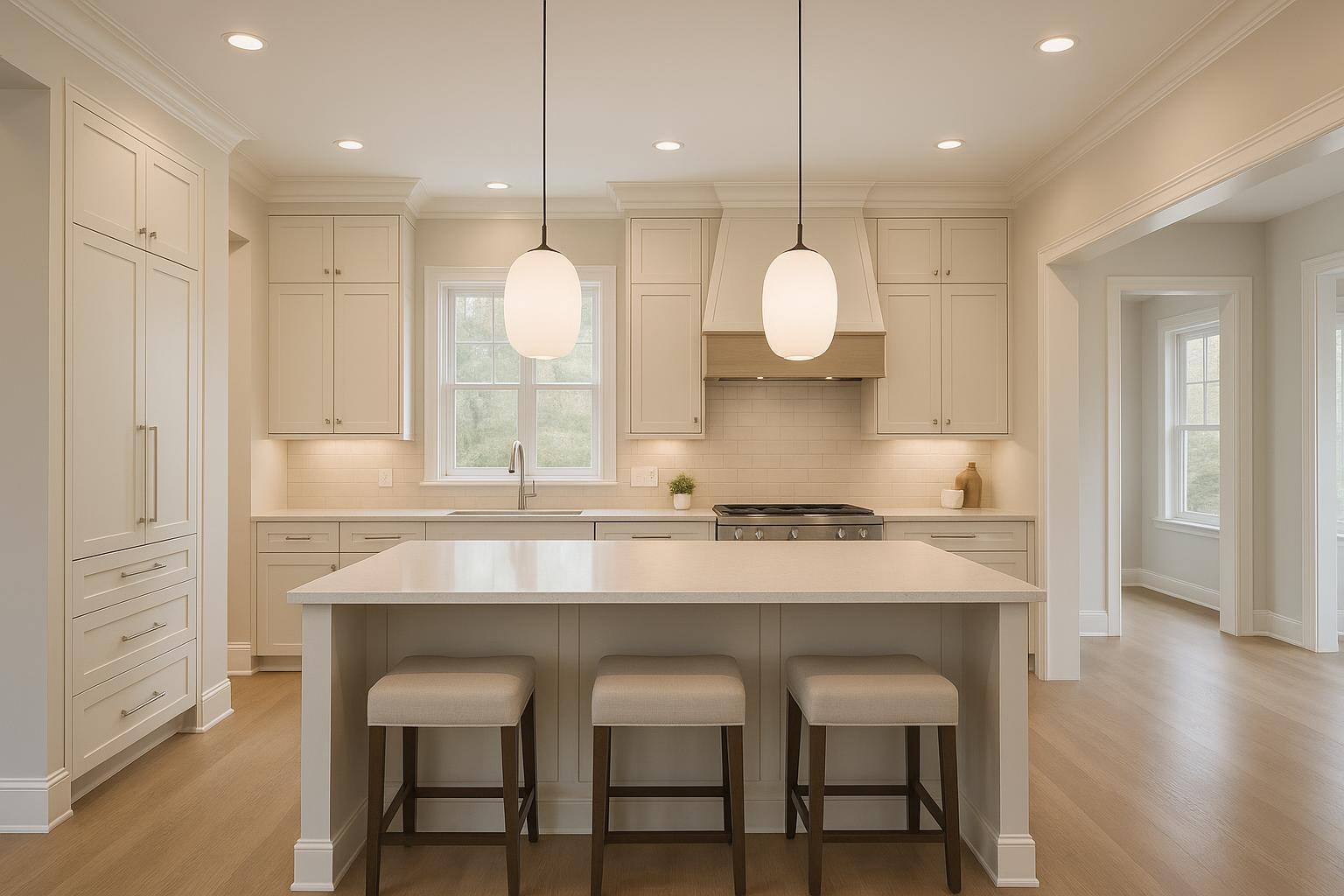
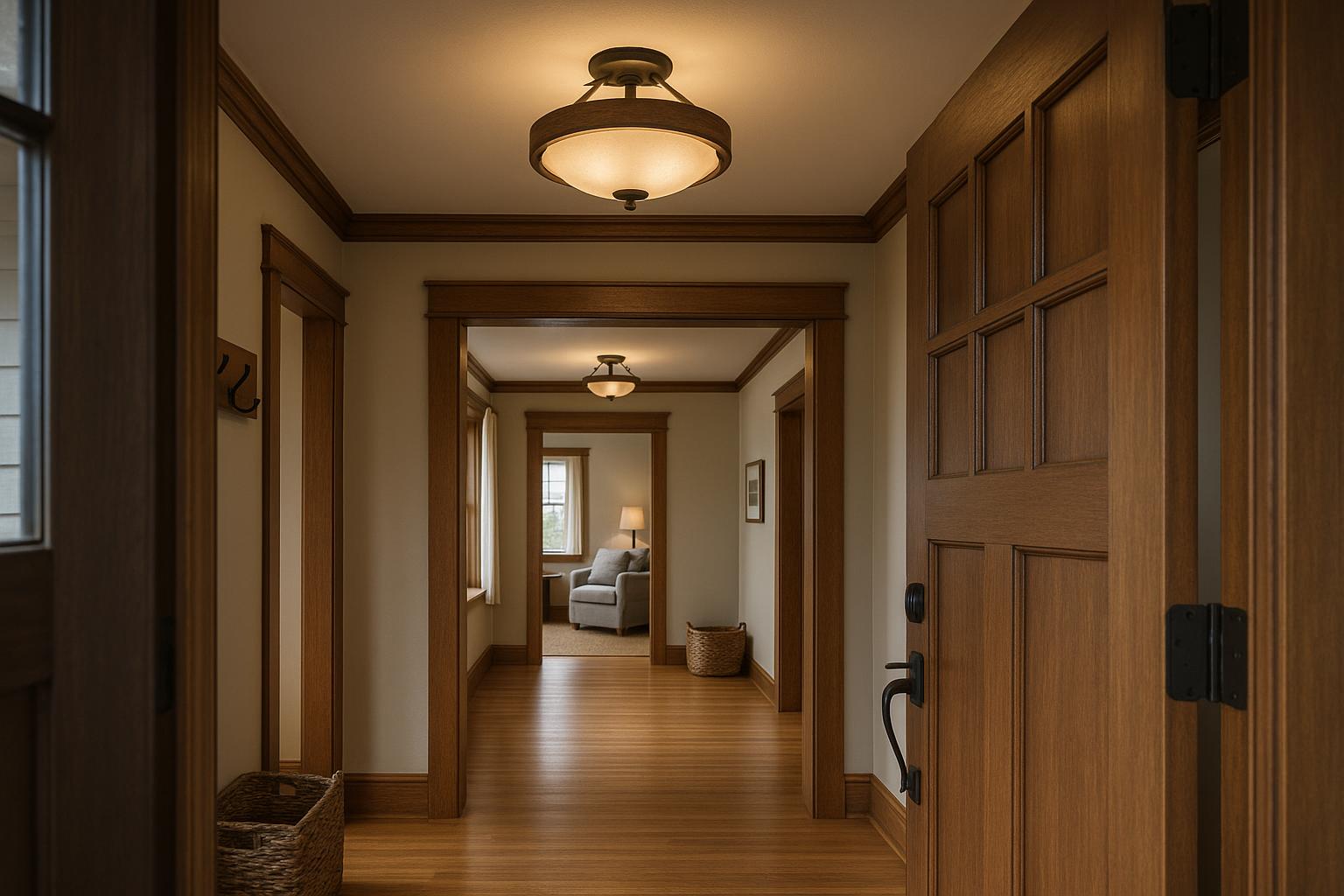
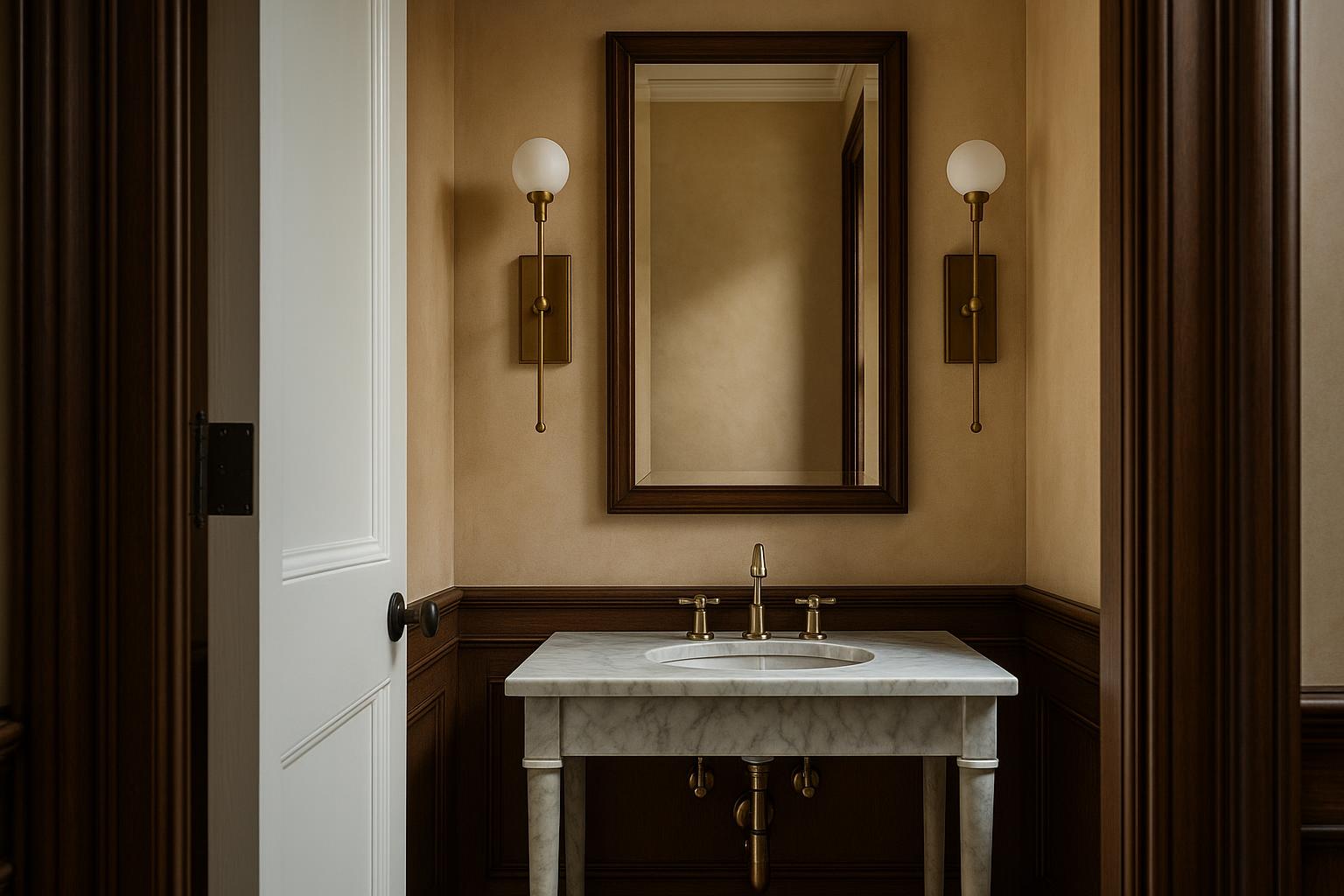
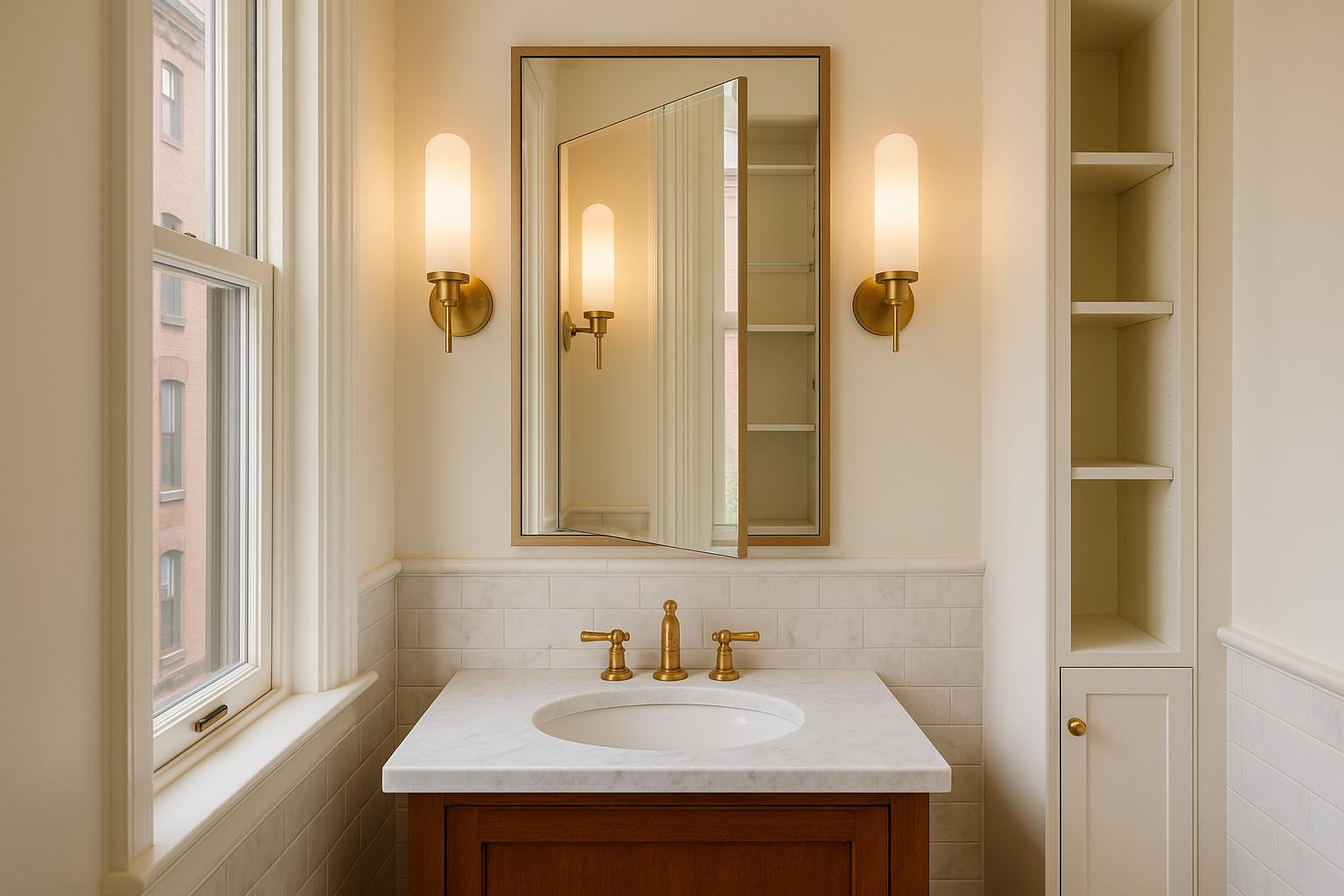
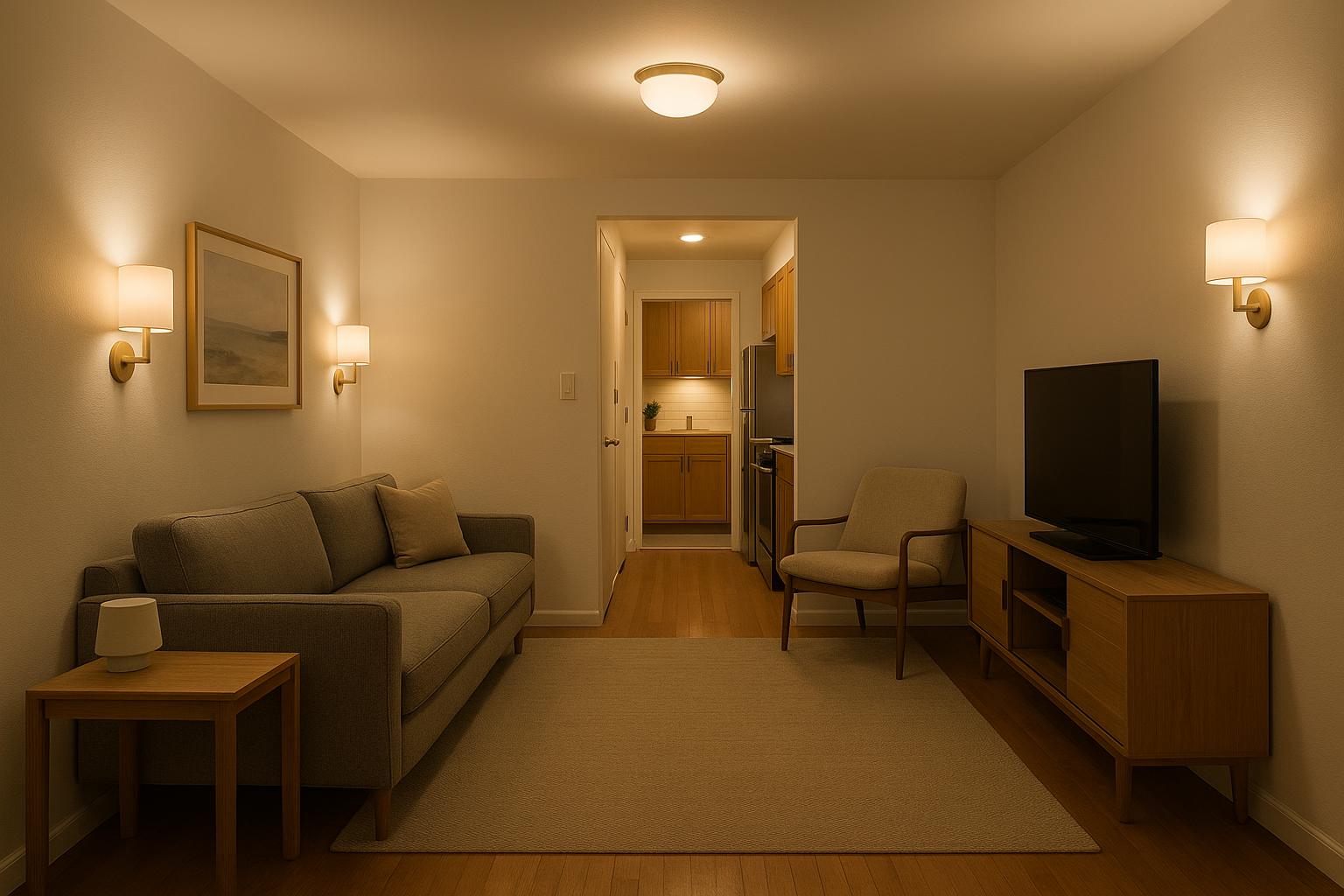
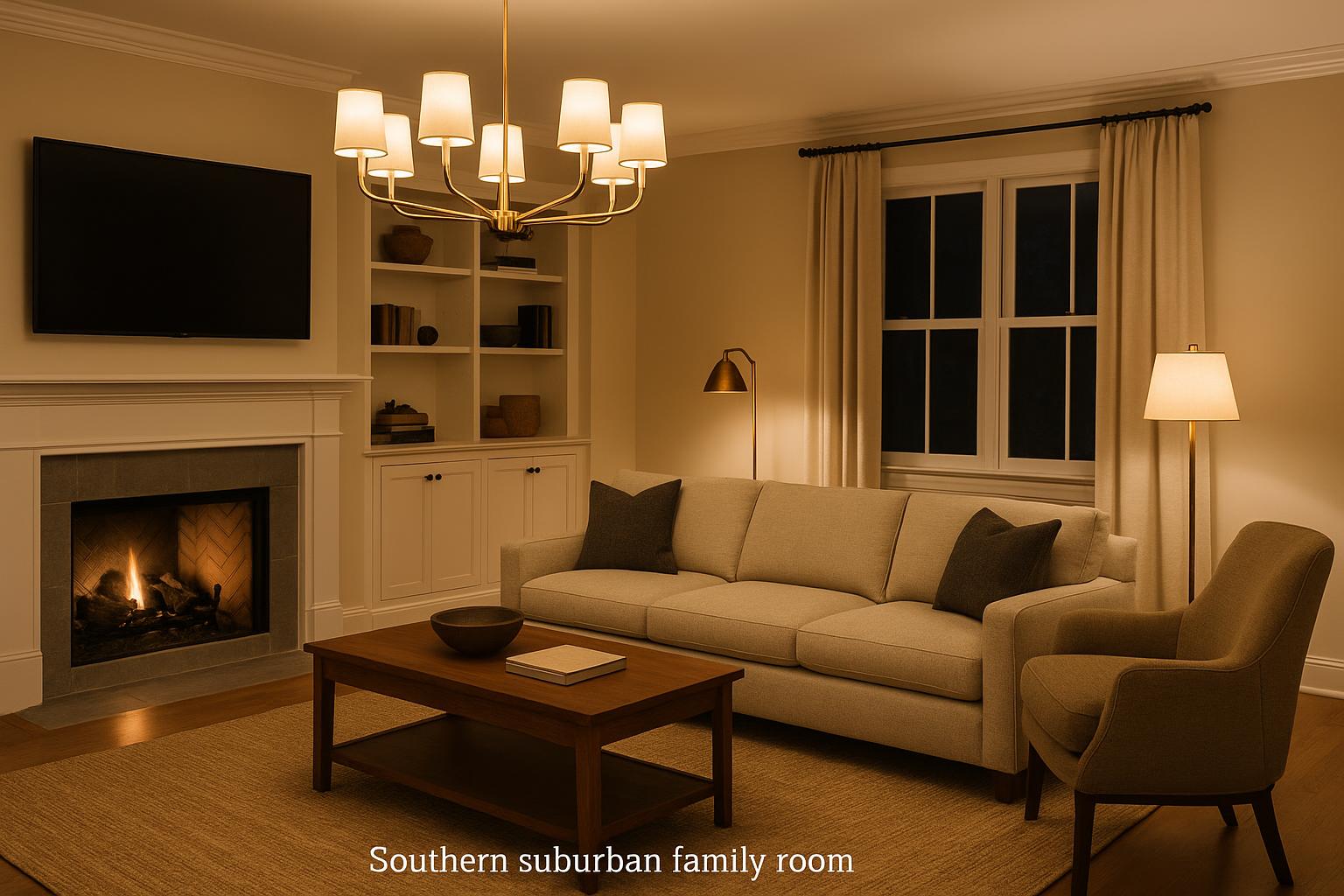
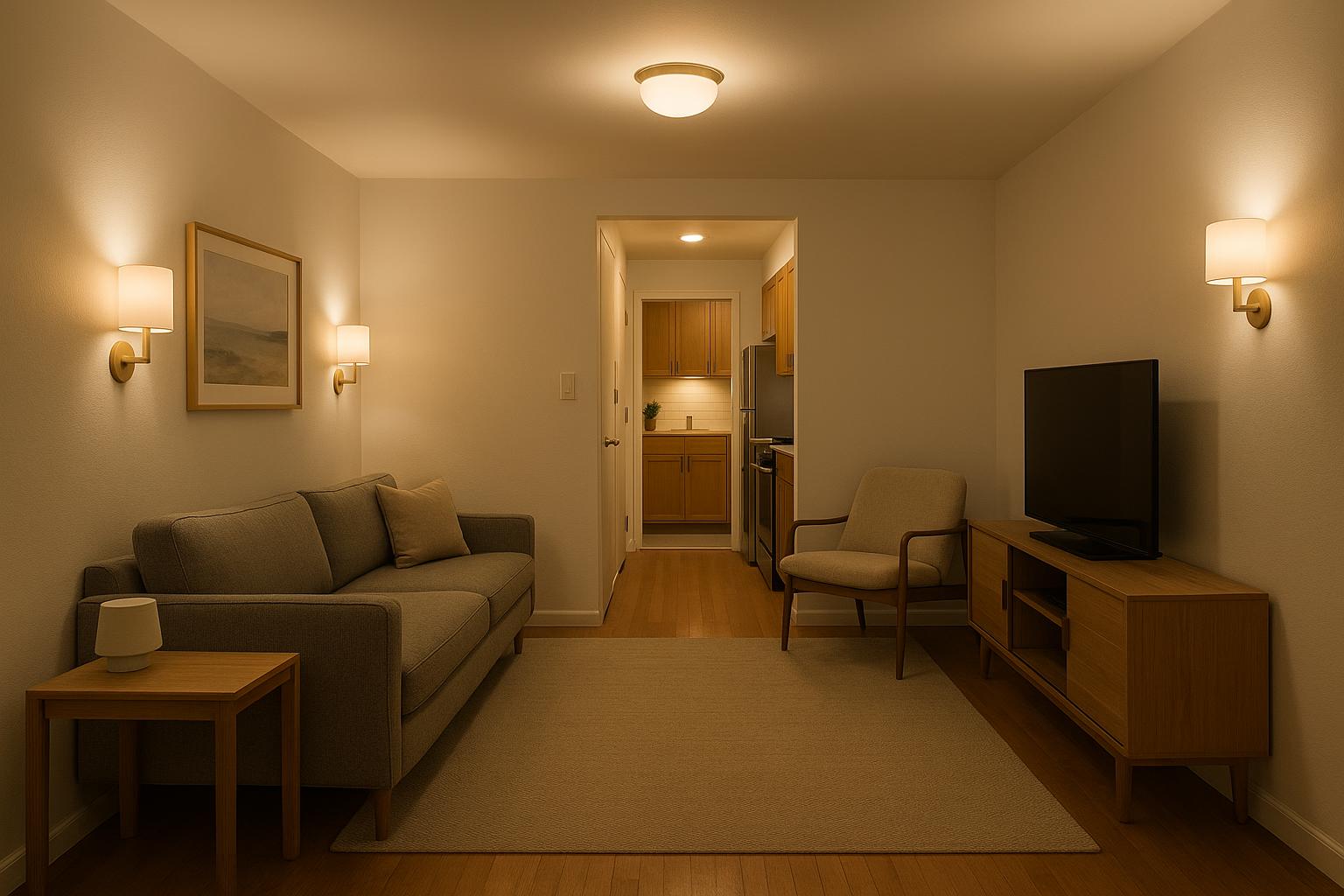
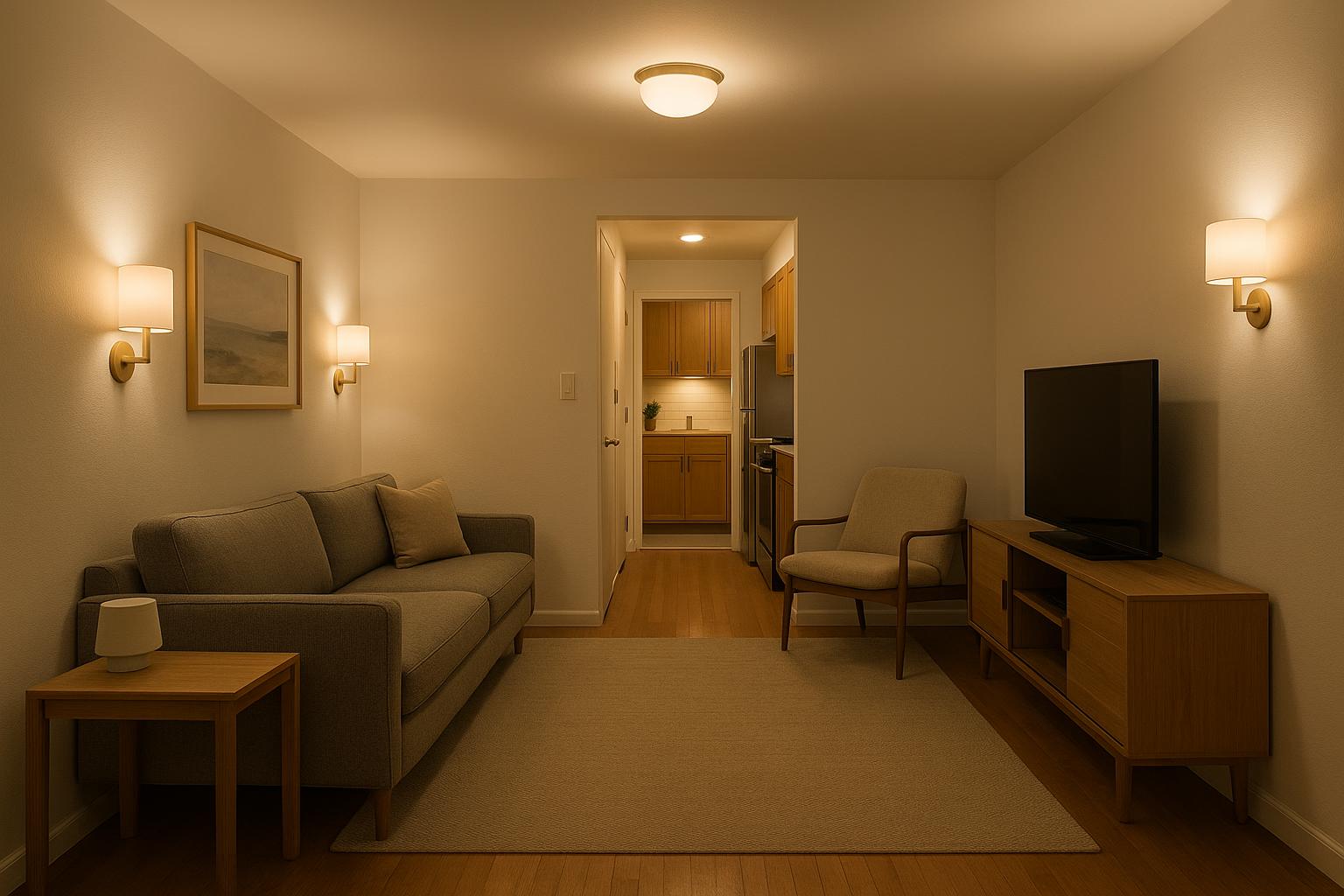
A mirror reveals angles that product photos and floor plans can miss. Evaluate reflected profiles, glare, fixture...
- There are no more items in your cart
- Shipping
- Total $0.00
Place Living Room Sconces From the Seat Out
A wall sconce is fixed in place, but a living room is not. Chairs shift, sectionals gain another piece, artwork changes, and a clear wall can become the preferred route to the kitchen. That tension is why sconce placement should begin with the way the room is occupied rather than with an empty wall.
The right wall sconces for living room use should make a particular seat, surface, or activity more comfortable. They may release an end table from lamp duty, bring soft light to a dark perimeter, or give a reading chair focused illumination. Their position should make sense from the sofa as well as from the doorway.
Start with the layout people actually use
Draw the current furniture arrangement before marking electrical locations. Include the sofa, sectional, lounge chairs, media console, fireplace, bookcases, end tables, and major walking paths. Note which pieces are likely to stay and which are moved for guests or seasonal changes.

Circulation deserves as much attention as symmetry. A deep wall light beside the entry to a New York apartment may look elegant from the front yet become an obstacle whenever someone carries groceries through the room. In a larger family room, a fixture mounted near the end of a sectional can feel misplaced if the sectional is later extended.
Check what is directly below each proposed location. A narrow console, low cabinet, or fixed end table provides a visual base for a sconce. An open route requires a shallower profile and more careful clearance. Also account for doors, window trim, drapery, return-air grilles, and tall furniture that could limit the usable wall area.
Give each wall sconce one main job
Decide what the light must accomplish before choosing its shape or finish. Most indoor wall sconces contribute ambient, task, or accent light. Some can serve two roles, but identifying the primary one prevents a decorative choice from being mistaken for a practical solution.
- Ambient light: Use a diffused, shaded, or indirect fixture to soften the room perimeter and supplement ceiling light.
- Task light: Choose a fixed or adjustable design that can direct useful light toward a book, game, or craft.
- Accent light: Select the beam and position according to the artwork, masonry, paneling, or other surface being emphasized.
Judge the fixture while imagining it illuminated. Clear glass and exposed bulbs can look restrained during the day but become uncomfortable at seated eye level. An opaque shade may be pleasant beside a sofa yet unsuitable for evenly lighting a painting. Product photography alone rarely reveals how bright glass, a visible bulb, or a narrow beam will appear from across the room.
Treat the sofa wall as a complete composition
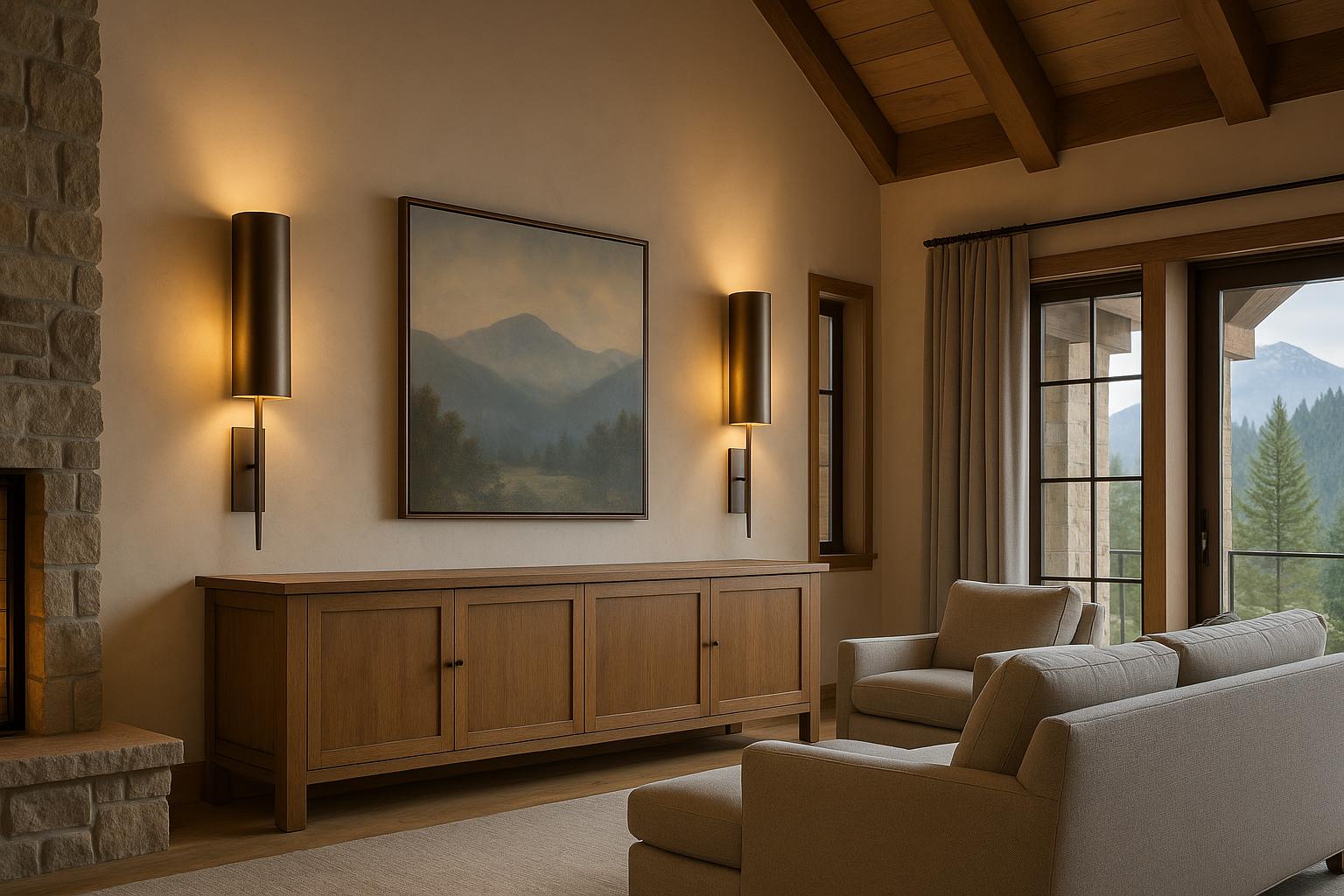
When sconces flank a sofa, they should frame everything on the wall rather than simply line up with the sofa arms. Consider the combined width of the seating, end tables, artwork, and architectural trim. A pair placed too close to a large painting can make all three elements appear squeezed together.
Leave enough separation for the artwork and fixtures to retain distinct outlines. If the wall holds a gallery arrangement, simple wall lights often create a calmer result than highly detailed decorative wall lights. On a broad wall with little art, fixtures with more visual weight may help connect the furniture to the architecture.
To complement this topic, you can also read How to Layer Brass Lighting Without Making the Living Room Matchy.
Exact symmetry works well with a centered sofa and one dominant artwork, but it is not a requirement. An off-center fireplace, doorway, or chaise may call for a looser arrangement. One sconce can support the sofa while another serves a nearby chair, as long as their scale, finish, or form creates a deliberate relationship across the room.
Place reading lights from a seated position
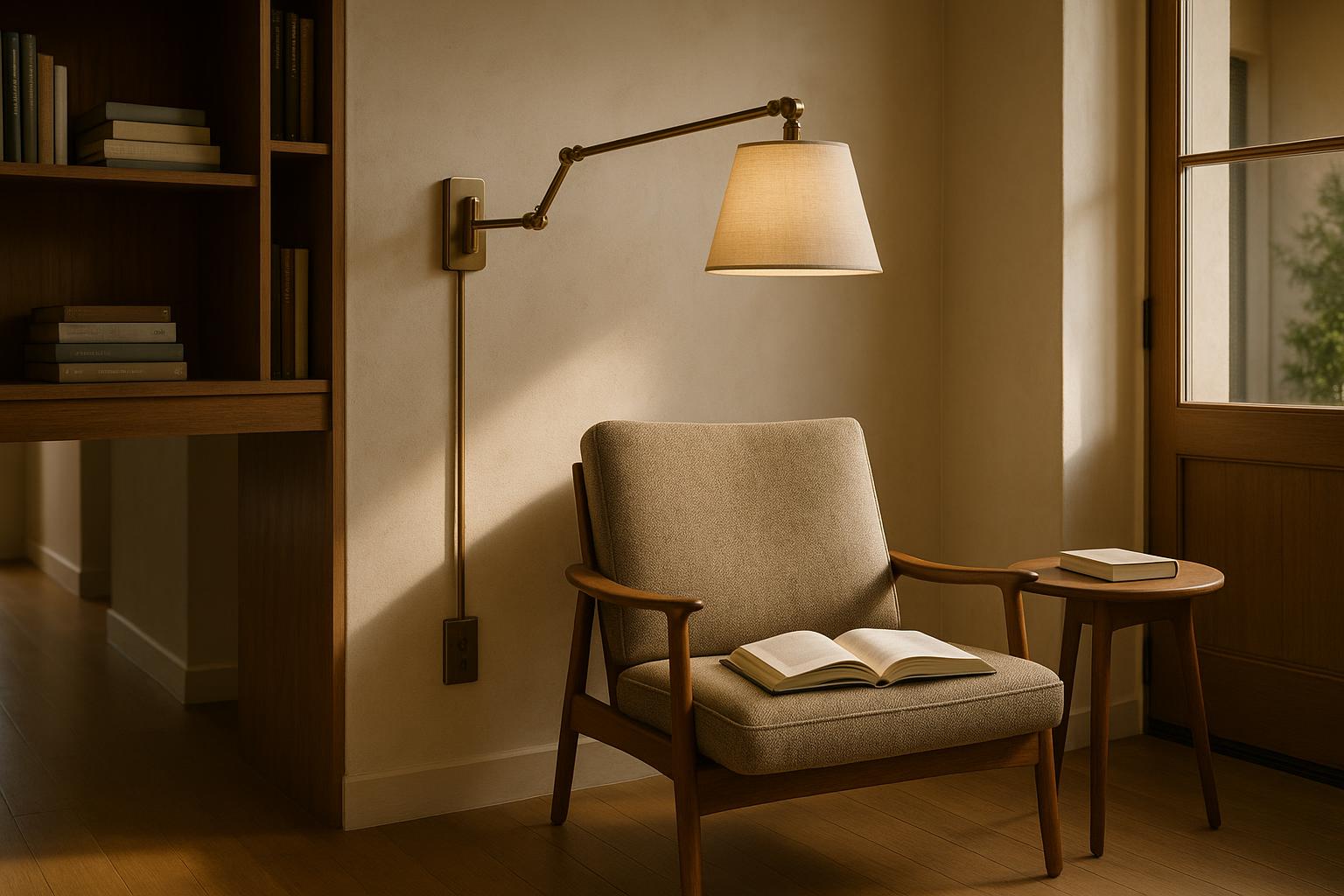
A reading sconce should be tested from the chair it serves. Sit normally and note the position of your head, shoulder, and reading material. The light should reach the page without putting the bulb or a bright patch of glass in peripheral vision.

A swing-arm model is helpful when readers of different heights share a chair. Confirm that its useful range does not require the arm to cross a walkway. Measure projection both folded and fully extended, including the shade. A fixed wall mounted light fixture can be a better choice when the chair has a permanent location and the available path is narrow.
Do not center a task sconce on the empty wall if doing so pulls the light away from the reader. Its relationship to the seated position matters more than its relationship to the wall dimensions. A control on the fixture or within easy reach of the chair also makes the light far more useful than a switch hidden behind furniture.
Protect television and fireplace sightlines
Television screens reveal glare that may be easy to miss during planning. Review each proposed sconce from every main seat, including chairs set at an angle. A bright globe can appear as a reflection on the screen, and a concentrated up-and-down beam can produce a distracting patch beside it.
Wall lights at the outer edges of a media cabinet are usually more comfortable when the source is shielded or softly diffused. Keep clear wall space between each fixture and the television so the arrangement does not resemble one crowded equipment panel. Speakers, shelving, ventilation space, and cabinet doors must remain usable.
A fireplace presents a different scale problem. Small sconces can disappear against a wide stone surround, while fixtures with substantial projection may look awkward on a narrow mantel wall. If a television is above the fireplace, the combined elevation is already busy. Additional lighting should earn its place rather than fill every remaining gap.
In the same direction, How to Choose a Black Chandelier for Your Dining Table offers useful ideas for choosing home lighting more confidently.
Balance mounting height, fixture size, and projection
There is no universal mounting height for every living room. A visual center around 60 to 66 inches above the floor is a useful mock-up range for many sconces, not a final rule. Shade direction, fixture height, seated eye level, furniture proportions, and ceiling height can all justify a change.
In a room with an 8-foot ceiling, mounting small fixtures too high can detach them from the seating group. A vaulted great room may have generous wall height, but the sconces still need to relate to people and furniture below. Tall fixtures also require attention to the actual location of the mounting plate, which may sit above or below the visual center.
Projection is part of scale. A 12-inch-deep fixture can feel substantial in a narrow passage even when its front view appears compact. Measure from the finished wall to the farthest point and check nearby doors, drapery, shelves, and traffic routes. Adjustable fixtures need clearance through their entire range of movement.
Mock up the plan before committing
Cut paper or cardboard to the exact fixture height and width, then tape it to the wall. For a deep or sculptural design, make a simple side profile as well. Mark the mounting plate so the electrician can see how the fixture body relates to the electrical box.
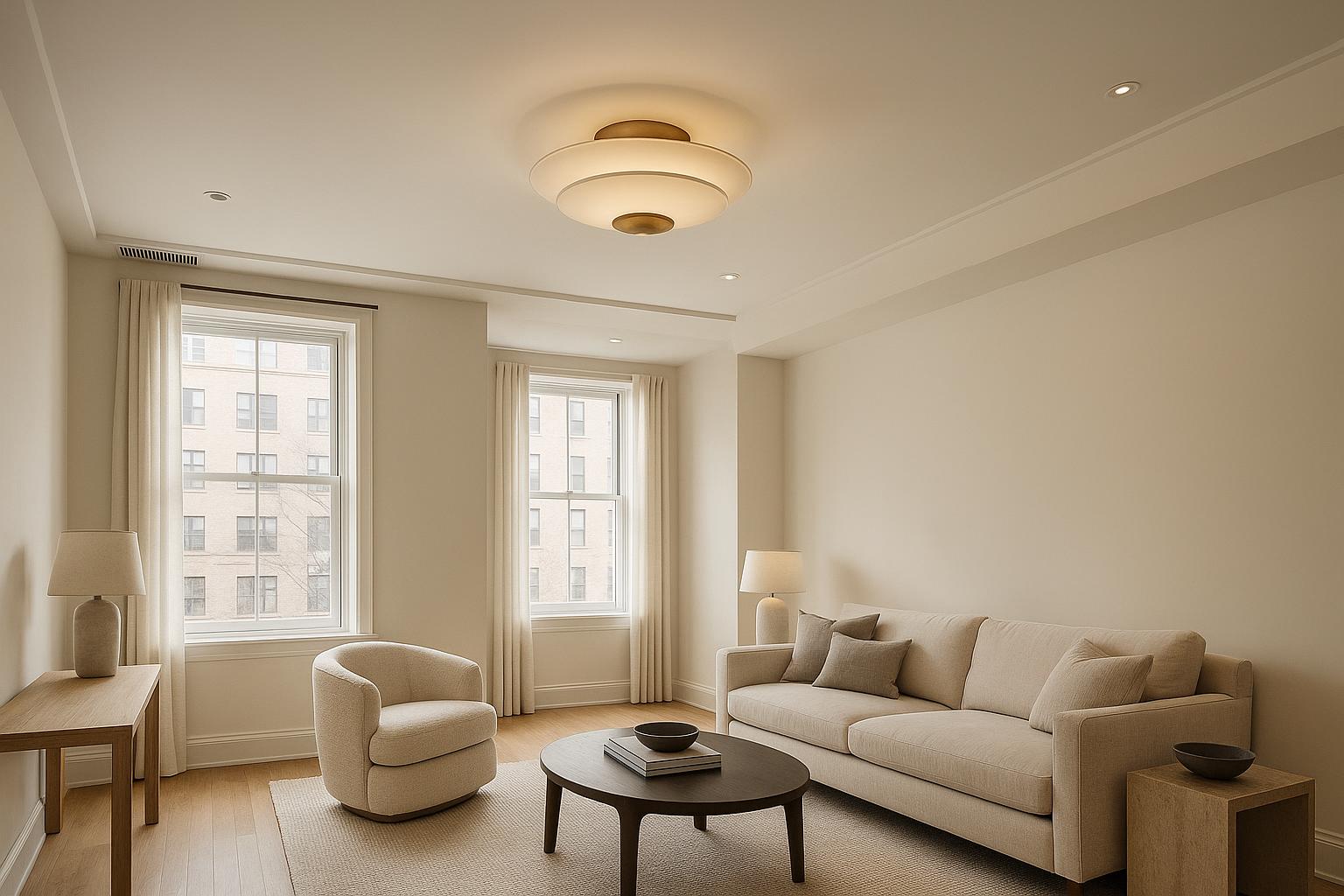
View the mock-up in daylight and after sunset. Sit in every primary seat, walk into the room from adjoining spaces, and look toward reflective surfaces. In an open-plan home, check whether the sconces compete with pendants over the kitchen island or a dining chandelier. Repeating one characteristic, such as a dark finish or curved outline, is often enough to make different fixtures feel related.
If furniture placement is still uncertain, a plug-in sconce can offer flexibility, although its cord and switch become visible design elements. Hardwired locations are less forgiving, so confirm the sofa width, artwork dimensions, and likely storage needs before opening the wall.
Check controls, specifications, and installation needs
Before ordering, record the fixture width, height, projection, mounting orientation, shade material, bulb or integrated-light requirements, and dimming information. Confirm whether the listed dimensions include adjustable arms or oversized shades. If the fixture is dimmable, verify compatibility among the light source, driver when applicable, and control.

General wall lights can share a dimmer, while a reading fixture often benefits from individual control. Switching should be understandable to guests and reachable without moving furniture. Smart controls may add convenience, but they should not make basic operation confusing.
Once the dimensions and purpose are settled, compare suitable options in the PureLights wall sconces collection. Favor the fixture that fits the available wall, sightlines, and lighting task rather than the most dramatic image in the catalog.
Have hardwired work completed according to the fixture instructions and applicable local requirements. A licensed electrician can assess junction boxes, wiring, controls, permits, and conditions hidden inside the wall. Review the final locations with the main furniture in place whenever possible.
Good sconce placement often feels obvious only after the room is finished. The light lands where it is needed, the fixture clears the path, and the wall looks composed without appearing overworked. Starting from the seat makes that result far more likely.