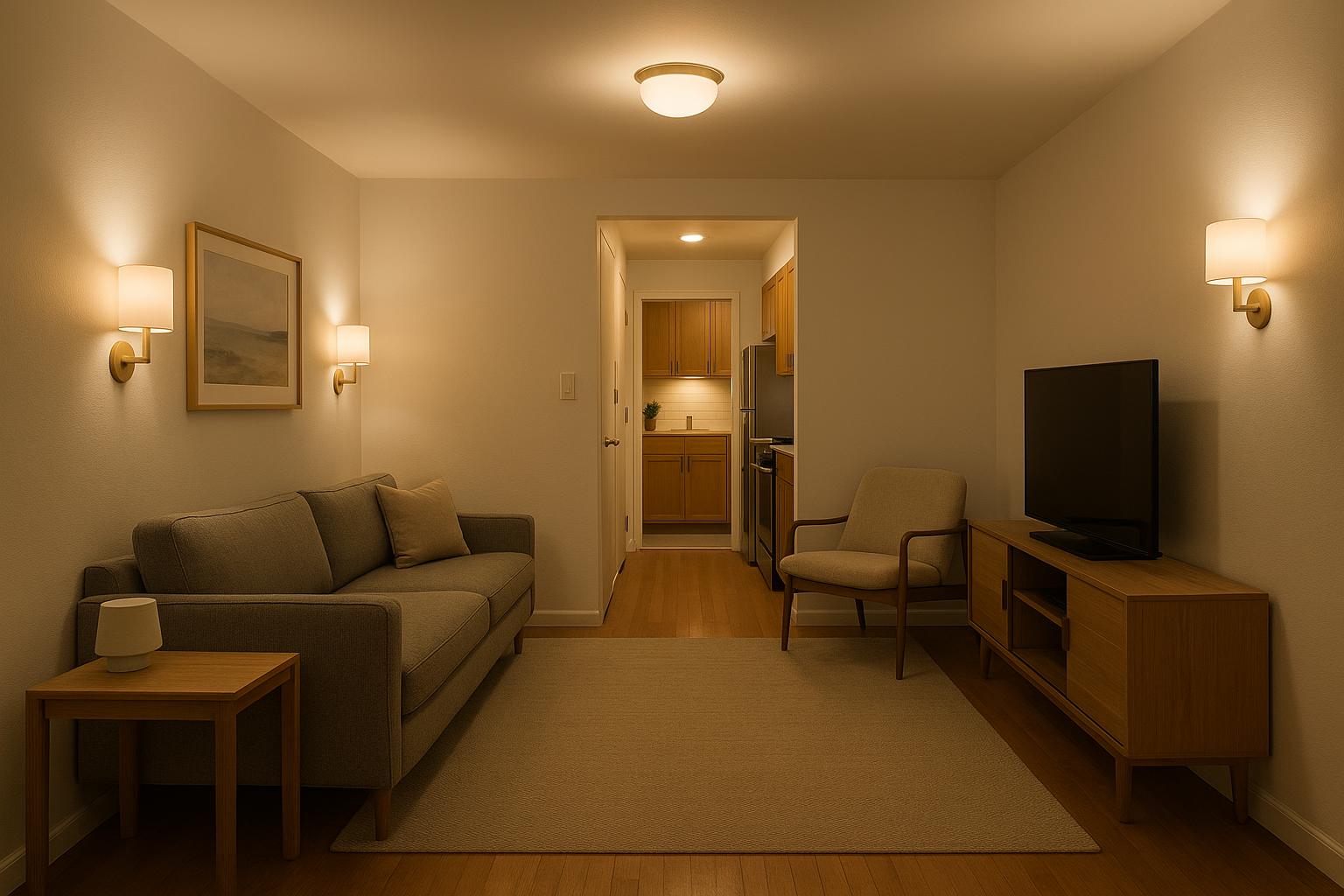
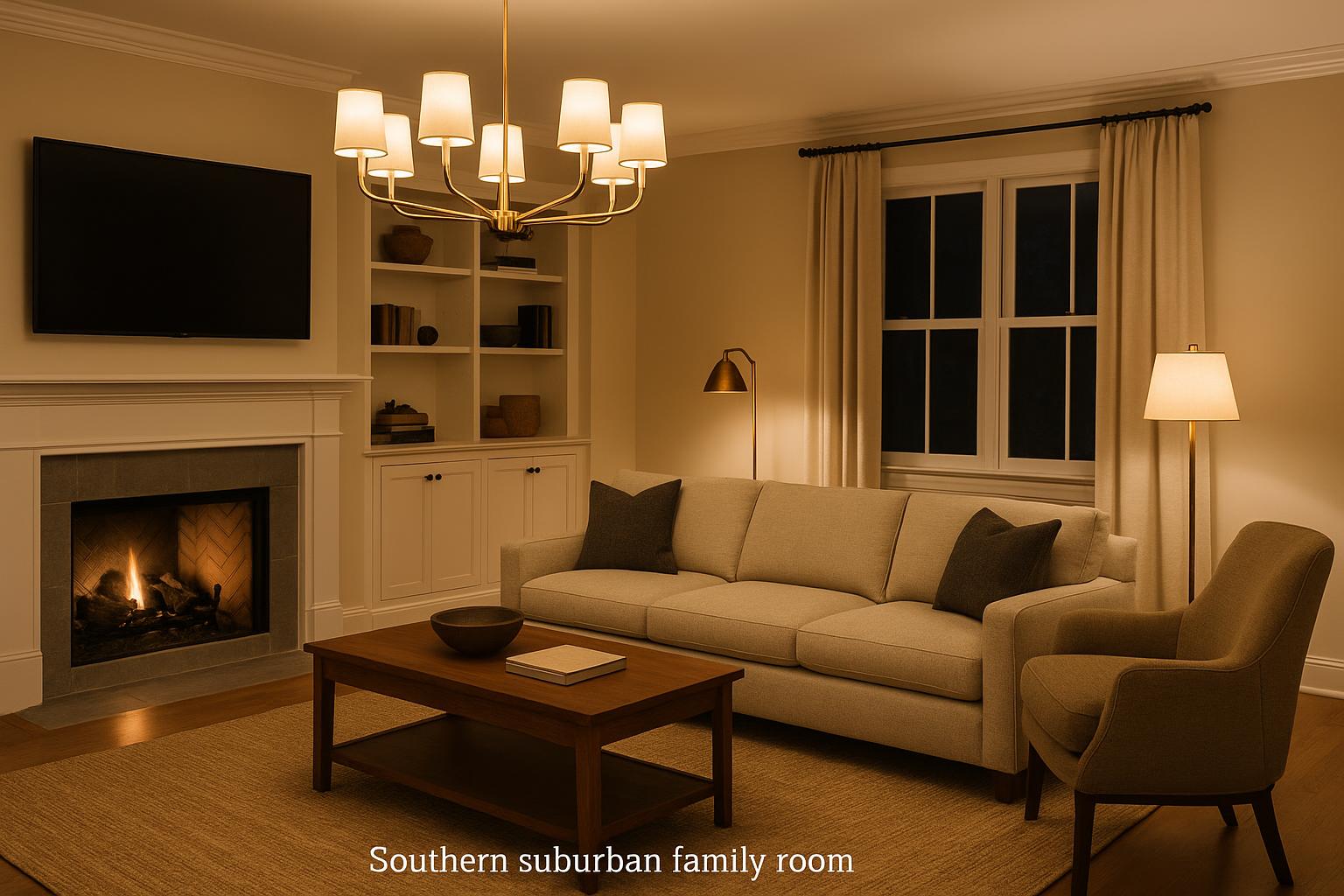
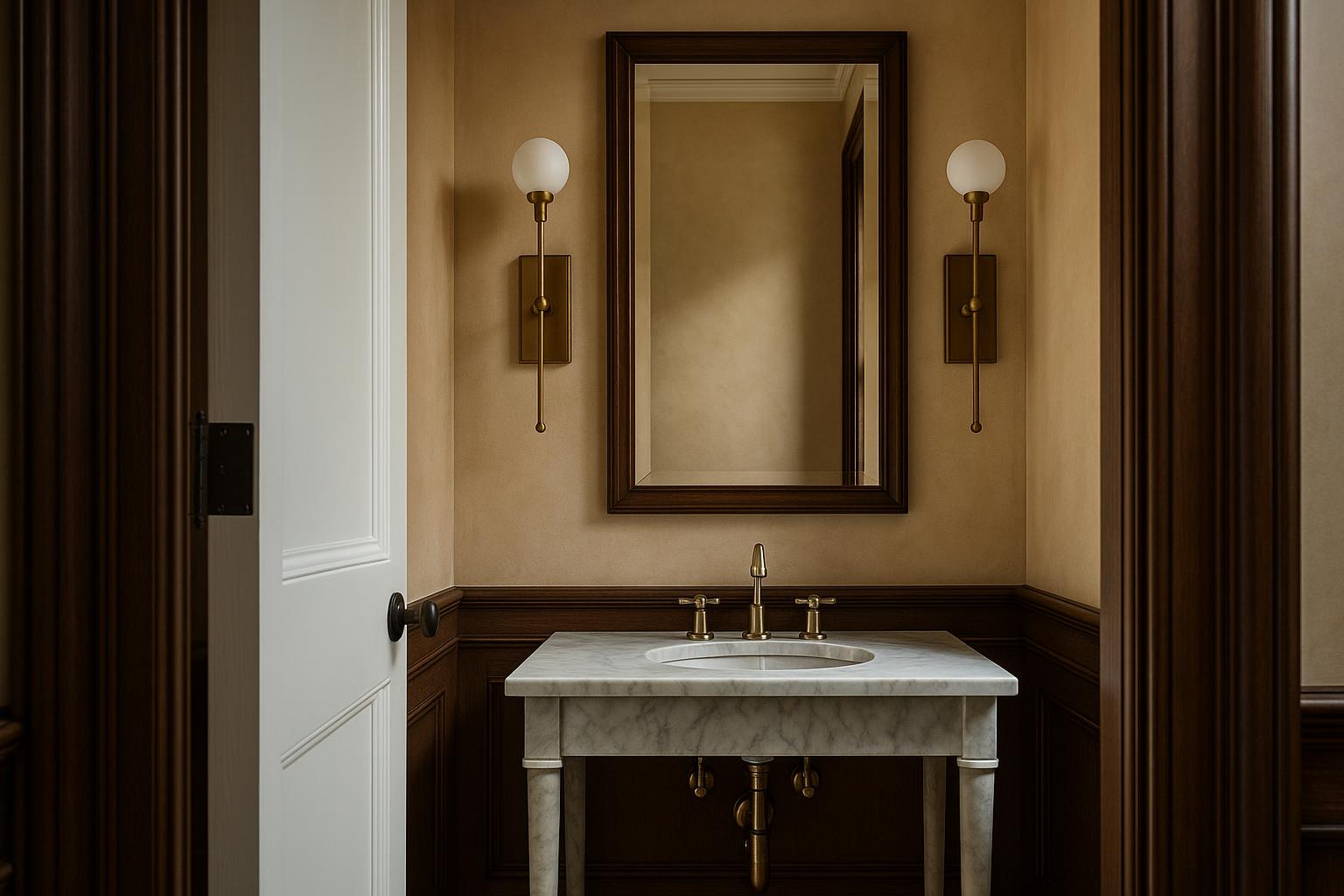
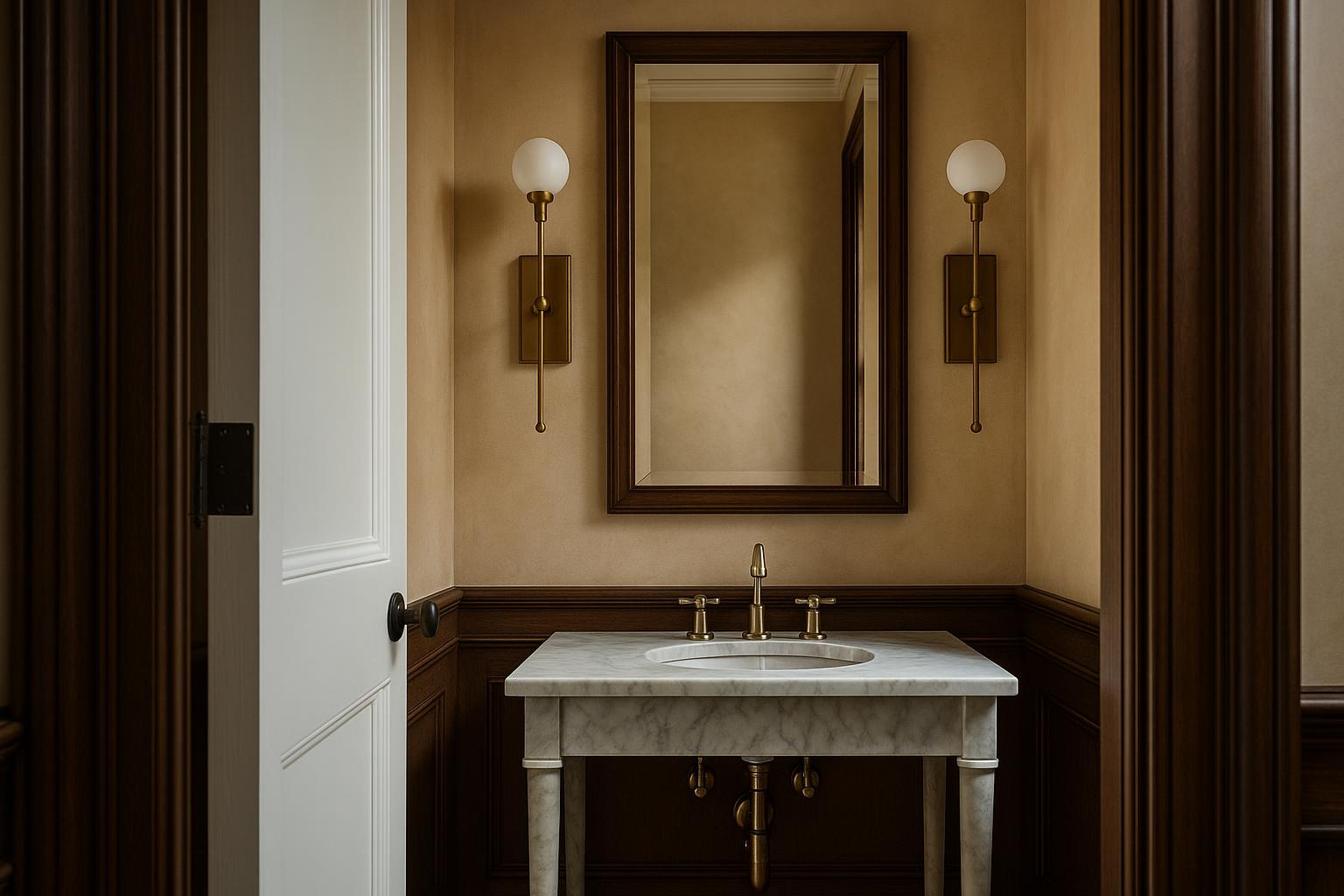
A mirror reveals angles that product photos and floor plans can miss. Evaluate reflected profiles, glare, fixture...
- There are no more items in your cart
- Shipping
- Total $0.00
What the Mirror Sees: Choosing Wall Lights From Every Angle
A mirror changes the way a wall light occupies a room. The fixture appears on the wall, but its arm, shade, backplate, bulb, and mounting details may also appear in the glass. From some positions, the reflected profile is more noticeable than the front.
That makes mirror wall lights a special design problem. Width and style still matter, but they are only part of the decision. You also need to consider what the mirror captures, how brightness repeats at eye level, and whether the fixture feels graceful when viewed from the side.
Begin with the reflected sightline
Start at the position from which the room is first seen. In a powder room, that may be the open doorway. In a primary bathroom, it may be the entrance from a bedroom or dressing area. A wall sconce that seems discreet while you stand at the sink can become a prominent object when viewed from across the room.

Next, stand where each person normally uses the mirror. Shift a few inches left and right rather than checking only the center. Those small movements can reveal a bare bulb, a thick mounting plate, or a second fixture that was hidden at the first angle.
This exercise separates the direct view from the reflected one. It also shows whether the fixture will appear whole, be cropped by the mirror edge, or overlap visually with a faucet, door casing, or ceiling light.
Map the mirror's field of view
A quick set of phone photos can document more than a sketch. Take one from the doorway, one from the main standing position, and one from any nearby hall or bedroom. If two people use a double vanity, photograph the view from both sinks.
Pay attention to the entire reflected field, not just the empty wall beside the mirror. The glass may capture a bright window, open shelving, a towel bar, recessed lights, or an adjoining room. Every additional object competes with the vanity lights for attention.
Record the dimensions that affect the choice:
- The visible distance between the mirror and nearby trim, cabinets, or corners
- The location and size of existing electrical boxes
- The maximum fixture depth that will clear doors and circulation paths
- The portion of the wall that appears in the mirror from normal viewing positions
These measurements are especially useful in a renovated bathroom where the mirror, vanity, and electrical boxes may not share a perfect centerline.
Inspect the fixture profile
Catalog photography usually favors a straight-on view. The mirror often exposes the less glamorous angle. Before choosing a fixture, examine every available product image and dimensional drawing. Look at the depth of the backplate, the connection between the arm and shade, visible screws, and the way the light source sits inside the fixture.
To complement this topic, you can also read Make the Ceiling Count: A Flush Mount With Real Presence.
Simple geometry tends to remain readable in reflection, but simplicity is not mandatory. A decorative wall sconce can work beautifully when its side and rear details feel resolved. The key test is whether the profile looks intentional enough to function as a second facade.
Clear glass deserves extra scrutiny. It can reveal sockets, labels, bulbs, and interior hardware that an opaque or frosted shade conceals. Those details may be minor in person yet surprisingly conspicuous when doubled against a bright mirror.
Soften repeated brightness
A visible light source beside the face can feel much brighter than the same source mounted overhead. The mirror repeats that source and may place the reflection directly in the viewer's line of sight. This is why glare control matters as much as nominal brightness at a vanity.
Opal glass, frosted shades, fabric shades, and integrated diffusers can create a broader luminous surface. Clear shades and exposed bulbs produce a sharper, more decorative sparkle, but they require careful evaluation from every normal viewing angle. A fixture that looks comfortable in daylight may become harsh after sunset when it is the dominant source.
Shade orientation also changes the result. An upward opening can brighten the wall or ceiling, while a closed diffuser can keep the source visually contained. If dimming is important, verify compatibility among the light fixture, bulb or integrated light source, control, and installation conditions.
Scale the doubled composition
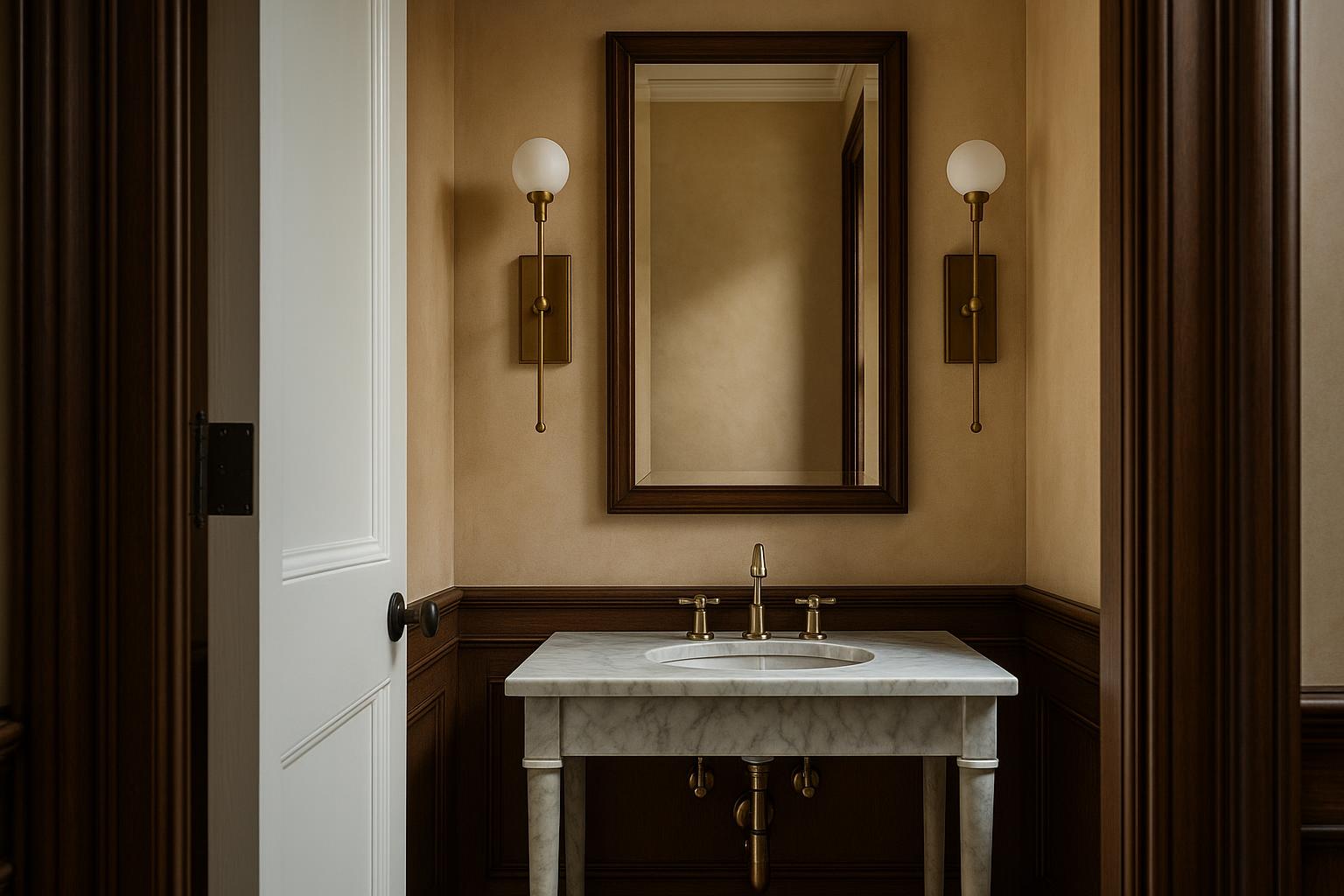
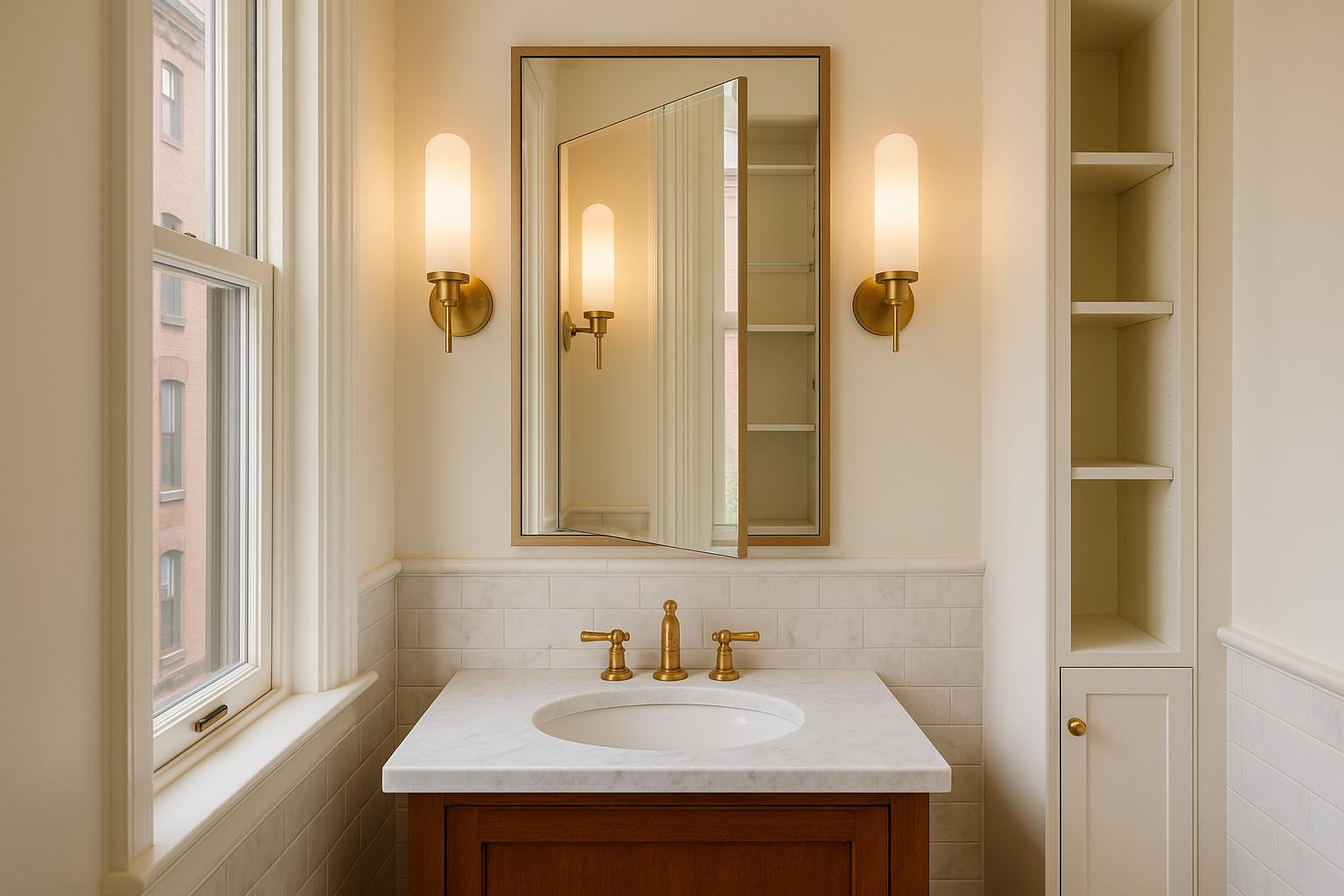
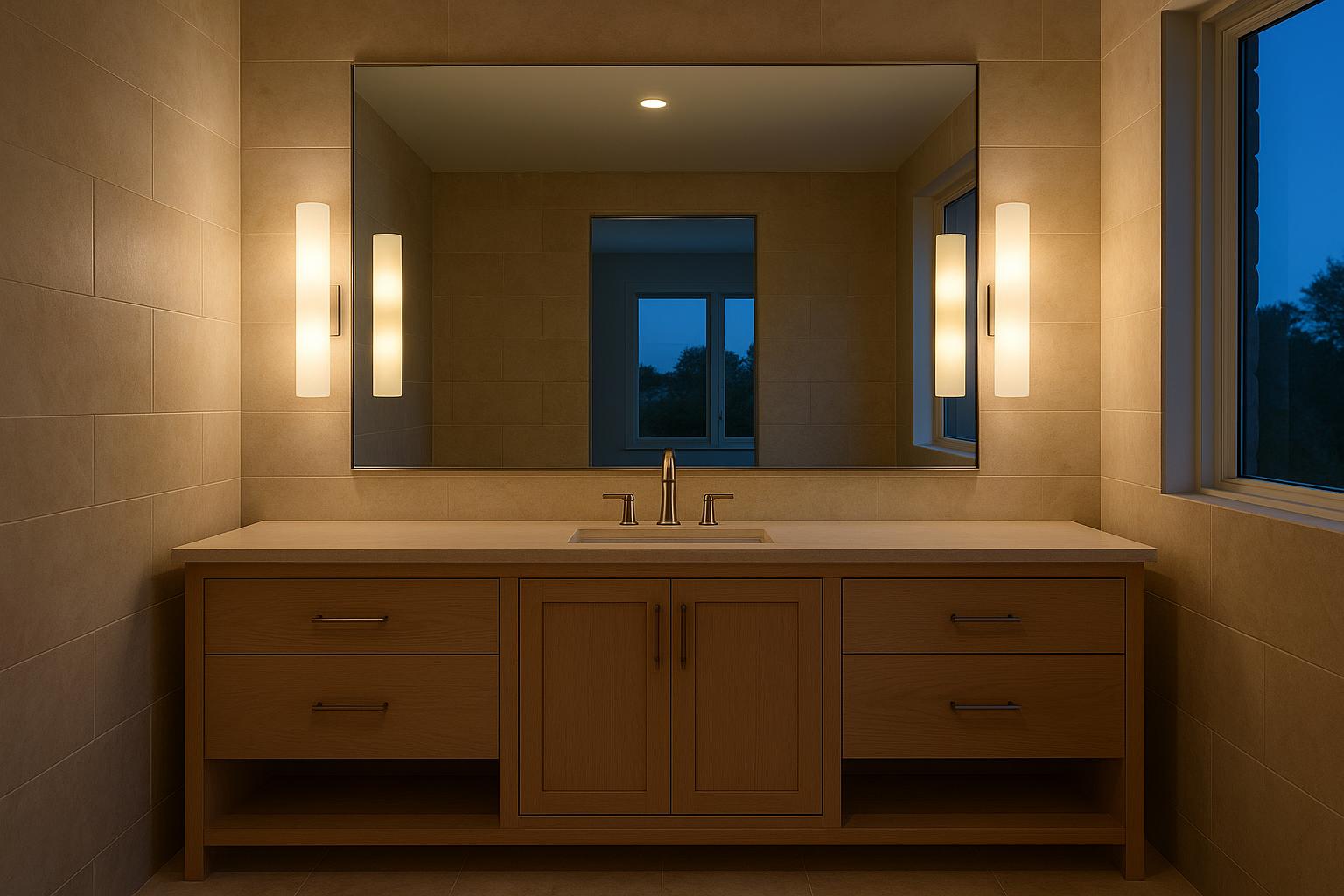
Two bathroom wall sconces do not always read as two. Their reflections can create a rhythm of four vertical forms, particularly around a wide frameless mirror. That repetition may give a plain vanity useful structure, or it may overwhelm an ornate frame and patterned tile.

Judge the combined visual weight of the mirror, fixtures, vanity, and background. A substantial wood or metal frame can hold its own beside larger shades. A thin mirror edge often pairs more comfortably with narrow cylinders, compact globes, or low-profile bars.
Contrast affects scale as well. Matte black hardware against a pale wall forms a strong outline and may look larger than its measurements suggest. A brushed nickel or soft brass finish closer to the surrounding tones can appear quieter. Polished finishes introduce another layer because they pick up bright points from the room and repeat them in the glass.
In the same direction, Plan Bathroom Wall Sconces Around the Mirror offers useful ideas for choosing home lighting more confidently.
Protect clearance in shallow rooms
Projection is easy to underestimate when most product images show only the front. In a narrow New York apartment bathroom or compact Chicago condo, a few extra inches can determine whether a fixture feels composed or intrusive.
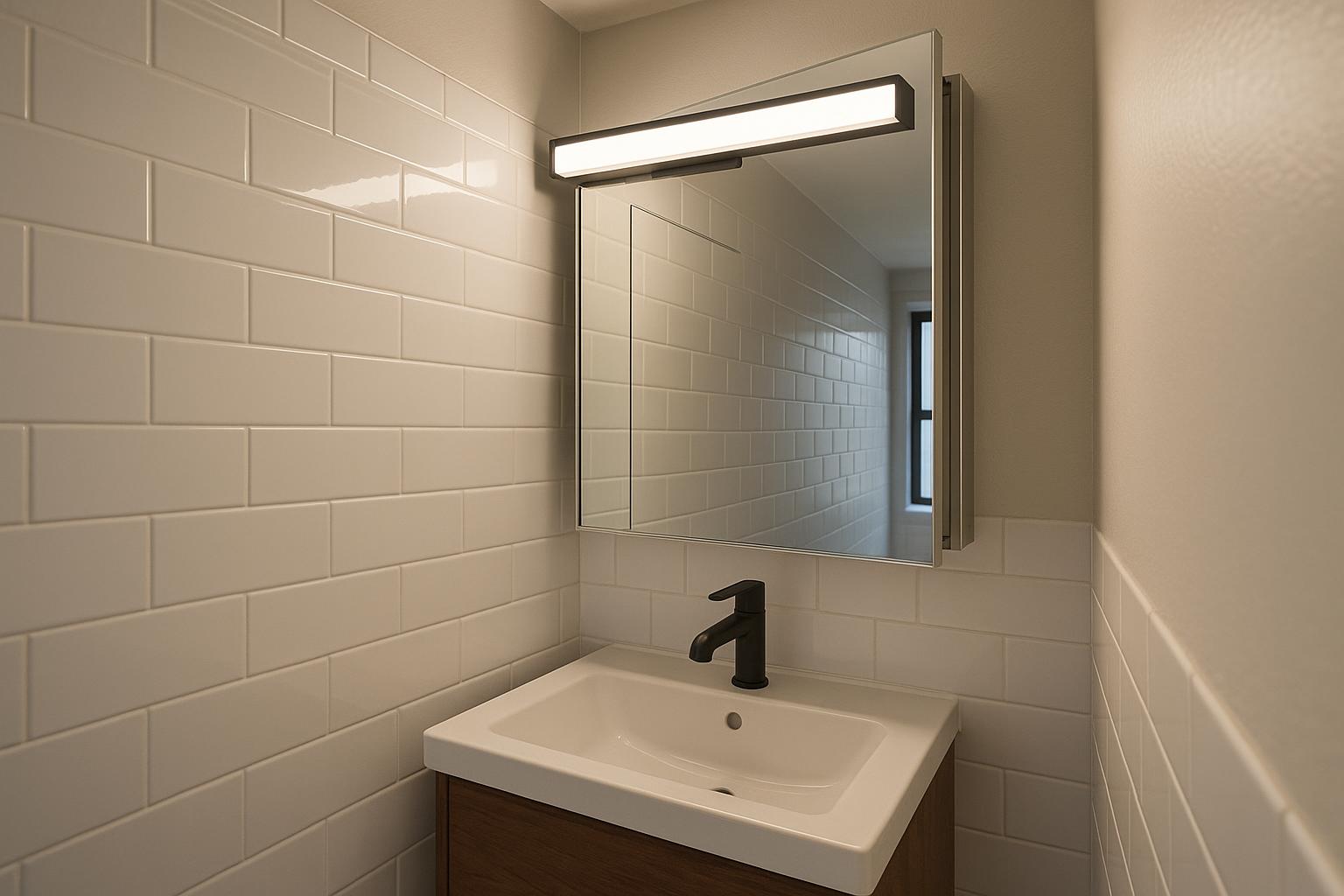
Compare the listed depth with the mirror frame, faucet, medicine cabinet, and any nearby door swing. A shade beside a hinged medicine cabinet can block the door even if both pieces fit separately on the wall. A deep arm near the sink may also enter the user's peripheral view or crowd a narrow passage.
The mirror can amplify that sense of depth by creating the illusion that the fixture extends into a second room. Low-profile bathroom mirror lights often settle more quietly into a shallow space. Deeper sculptural forms are easier to accommodate where the vanity wall has generous width and the room offers longer sightlines.
Compare color and finish after dark
Daylight can hide differences that become obvious at night. Review the room in the morning, near dusk, and with daylight excluded if possible. Tile, paint, skin tones, wood cabinetry, and metal finishes can all shift under different light sources.
Use manufacturer-provided color information to compare candidates, and be cautious about combining visibly different light colors around one mirror. Cool vanity lights paired with a much warmer ceiling fixture can divide the reflection into separate color zones. That may be intentional in a decorative room, but it is often distracting during grooming.
Finish should receive the same day-and-night test. Brushed and matte surfaces usually produce broad, muted highlights. Polished metal can look lively and elegant, yet it also mirrors nearby bulbs and windows. Metals do not need to match exactly, but their sheen and underlying warmth should look related when illuminated.
Plan wide and double vanities as one scene
A double vanity is not merely two single vanities placed side by side. Sink positions, separate or continuous mirrors, center storage, and individual standing zones all influence the composition. One long vanity light can unify the wall, while several smaller fixtures can define separate grooming areas.
For more consistent lighting throughout the home, the article Place Living Room Sconces From the Seat Out may also be helpful.
Watch the center carefully. A wall sconce between two mirrors may create a useful visual hinge, but its reflection can make the middle feel heavier than expected. Fixtures at the outer edges may produce a calmer center while increasing the overall span. Neither layout is automatically correct; the surrounding cabinetry and reflected background should decide.
Also check whether one user can see a bright fixture intended for the other sink. A comfortable arrangement from the left basin may produce direct glare from the right. Testing both positions prevents a symmetrical plan from becoming visually uneven in daily use.
Make the decision with a full-size mockup
Before ordering, outline each candidate on the wall with removable painter's tape or a paper template. Include the backplate, shade, and full projection rather than marking only the center point. View the mockup from the doorway and in the mirror, then open every nearby cabinet and door.

The template cannot predict light quality, but it can reveal crowding, awkward cropping, and excessive visual weight. Compare shortlisted fixtures by profile, diffusion, depth, finish, and the appearance of their mounting hardware. Give the reflected view equal authority with the front.
You can browse the PureLights collection of mirror wall lights once those constraints are clear. Use the listed dimensions and product information to narrow the options rather than choosing from the main image alone.
For bathroom installations, follow the product instructions and confirm that the fixture is suitable for the intended location. A licensed electrician can evaluate electrical boxes, controls, clearances, and applicable requirements. The final choice should look composed from the doorway, remain comfortable at the sink, and hold up when the mirror shows its other side.