A practical field test for choosing pendant lights that fit the surface below, direct light where it is needed, and...
- There are no more items in your cart
- Shipping
- Total $0.00
The Pendant Field Test: Fit, Light, and Drop
A pendant light is rarely experienced the way it appears in a product photograph. The camera may isolate the fixture against an empty wall, while the finished room surrounds it with cabinets, windows, furniture, people, and other lights. A design that looks delicate online can feel busy at eye level. A dramatic shade can shrink when placed over a 9-foot kitchen island.
Understanding how to choose contemporary pendant lights starts with the room rather than the catalog image. Establish what the fixture relates to, where its light should land, and how it will appear from the seats and walkways around it. Finish and color matter, but they should come after fit, light quality, and suspension have been tested.
Establish the Fixture’s Reference Point
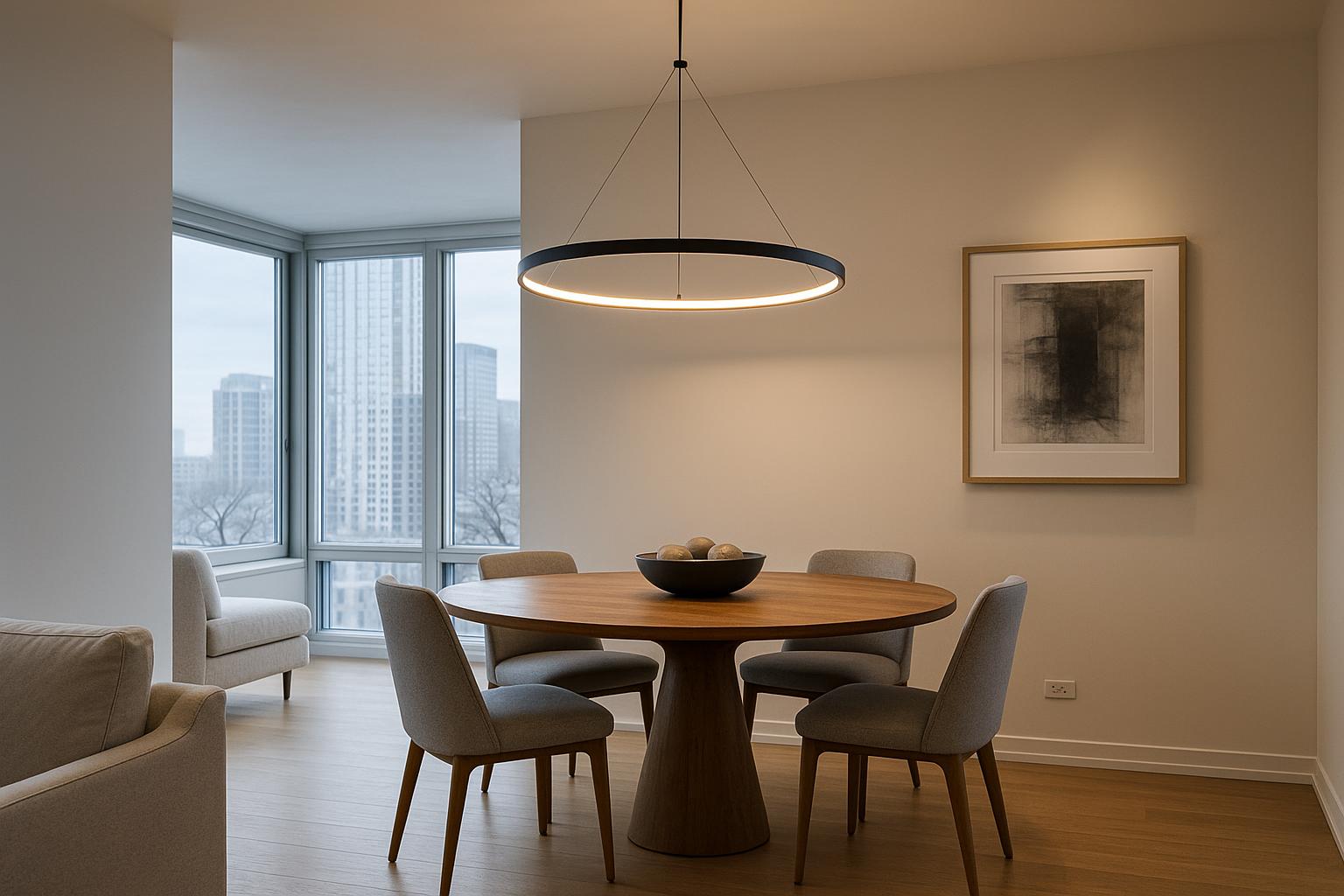
Decide what visually anchors the pendant. Over a dining table, the table is usually the reference point even when it is not centered in the room. Over a kitchen island, use the countertop dimensions and seating positions. In an entryway or stairwell, the relevant boundary may be the open floor area or the full vertical space between levels.

Measure the length and width of that reference, then record the ceiling height and junction-box location. Do not assume the box is centered over the furniture. This is common in remodeled kitchens, where an island has moved while the electrical point has not. A swagged cord or offset canopy may solve some alignment problems, but only when the fixture is designed for that installation.
Also photograph the area from its normal approaches. The view from the family room may reveal a cabinet conflict or crowded ceiling that is not obvious when standing directly beneath the box.
Give the Pendant a Specific Job
Write a short assignment for the fixture. It might provide task light across an island, create a comfortable pool of light over a breakfast table, mark a seating area in an open plan, or bring visible form into a two-story foyer. That sentence helps separate useful candidates from attractive distractions.
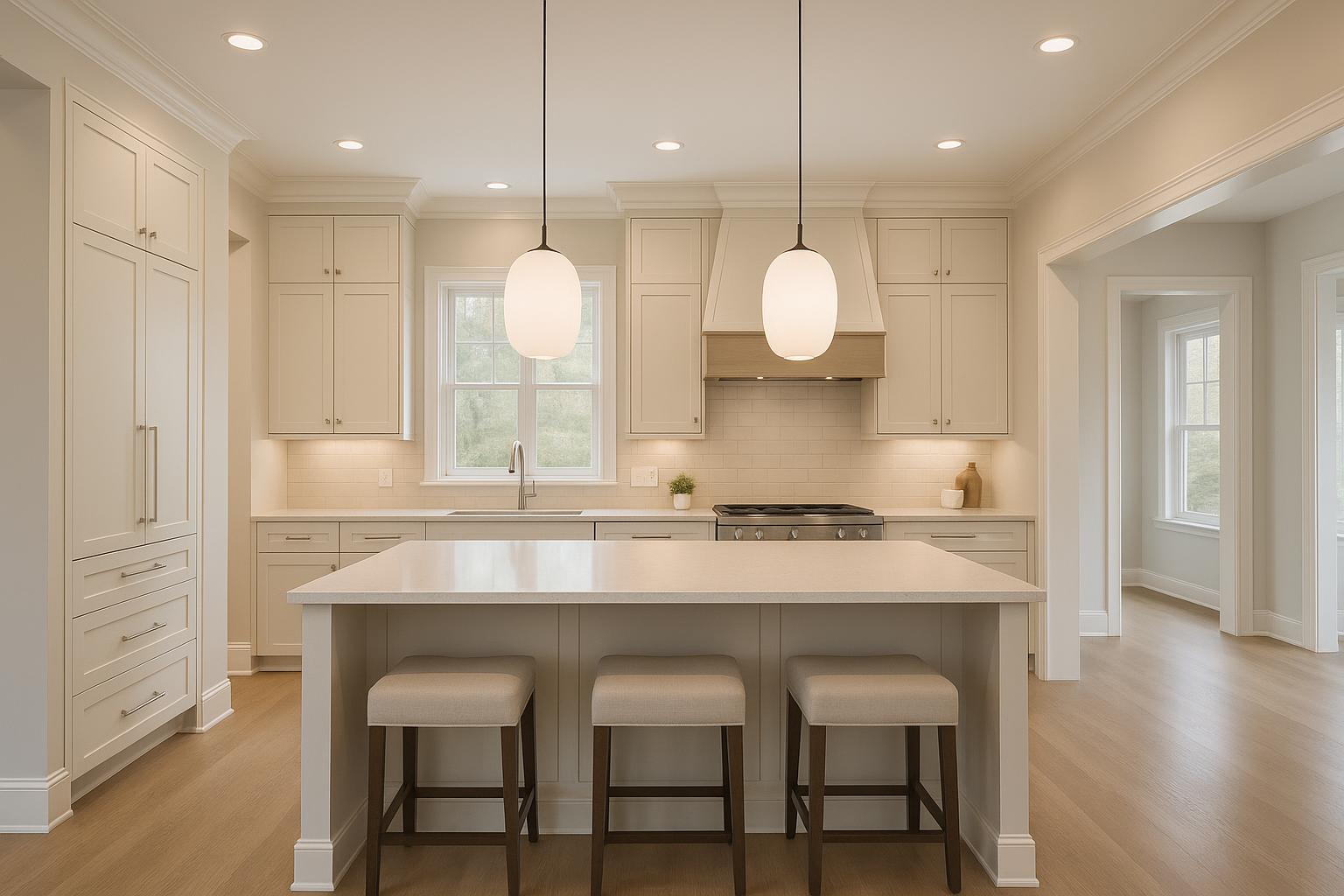
A shaded pendant that sends most of its light downward may perform well over a work surface but contribute little ambient light to a great room. A glowing glass globe may brighten the surrounding space while producing less focused light on the counter. Neither is inherently better. The right choice depends on recessed lights, wall sconces, lamps, and daylight already available.
If the pendant will be the room’s primary source after dark, verify that its documented output and distribution can support that role. Do not expect a sculptural fixture with a small light source to illuminate a large room simply because its body is oversized.
Study the Light Before the Silhouette
Look inside the shade and beneath the diffuser. An open-bottom metal shade can place strong light on a counter, but the bulb may be visible from a nearby chair. Clear glass keeps sightlines open and releases light broadly, yet an exposed source can create glare. Frosted or opal glass conceals the lamp and produces a softer glow, although the light on the surface below may be less concentrated.
To complement this topic, you can also read A Quieter Kind of Rustic: How to Choose a Flush Mount.
Consider every likely eye level. A source hidden from someone standing at an island may be plainly visible to a person seated on a sofa. Dining pendants deserve the same check because people spend long periods looking across the table. Laptop screens and glossy stone counters can also reflect an exposed bulb.
Review the listed bulb type or integrated LED information, output, color temperature, and dimming requirements. For a dimmable fixture, the light source, driver, control, and wiring arrangement must be compatible. Dimming is especially useful where bright preparation light needs to become calmer evening light.
Compare Visual Weight, Not Just Width
Diameter describes the fixture’s outer boundary, not its apparent size. A broad pendant made from thin rings may occupy less visual territory than a smaller opaque dome. Clear glass, open frameworks, pale finishes, and narrow suspension lines tend to preserve views. Dark shades, layered materials, thick frames, and multiple bulbs read as denser.

Use this distinction to correct for the room. A Chicago condo with an 8-foot ceiling may benefit from a wider but visually open form rather than a compact, heavy shade. In a vaulted kitchen with tall cabinets, a thin mini pendant can disappear even when its dimensions seem reasonable on paper.
Judge the fixture against the furniture below and the architecture behind it. If the pendant will overlap a window, artwork, or open-plan living area from a common viewpoint, its transparency and profile may matter more than its measured width.
Check the Ceiling and Suspension
The canopy, cord, rod, or cable system is part of the selection. Confirm the fixture’s body height along with its minimum and maximum overall drop. A product may have a compact shade but still hang too low because its shortest rod cannot be reduced.
For a sloped ceiling, verify that the canopy and suspension are specifically compatible with the angle. A flexible cord often hangs vertically, while a rigid stem may need a swivel or slope adapter. Beams, vents, cabinet doors, recessed lights, and ceiling fans can further limit the usable area around the junction box.
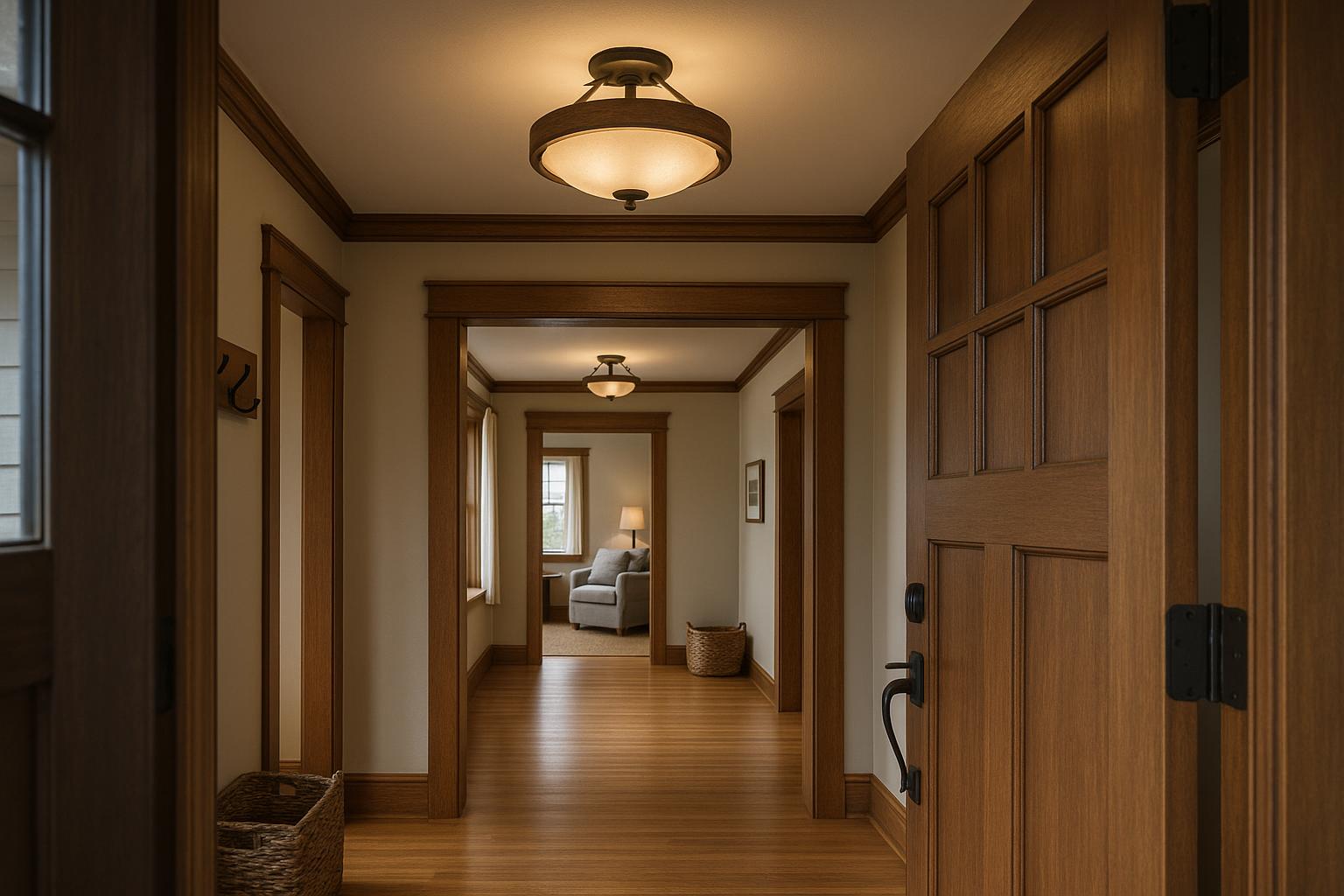
Low ceilings do not automatically rule out pendants over tables and islands because the surface protects the space below. They do make proportions and sightlines less forgiving. Where people walk underneath, compare the pendant with a flush mount or semi-flush mount before sacrificing comfortable clearance.
In the same direction, What the Mirror Sees: Choosing Wall Lights From Every Angle offers useful ideas for choosing home lighting more confidently.
Build a Single, Row, or Cluster
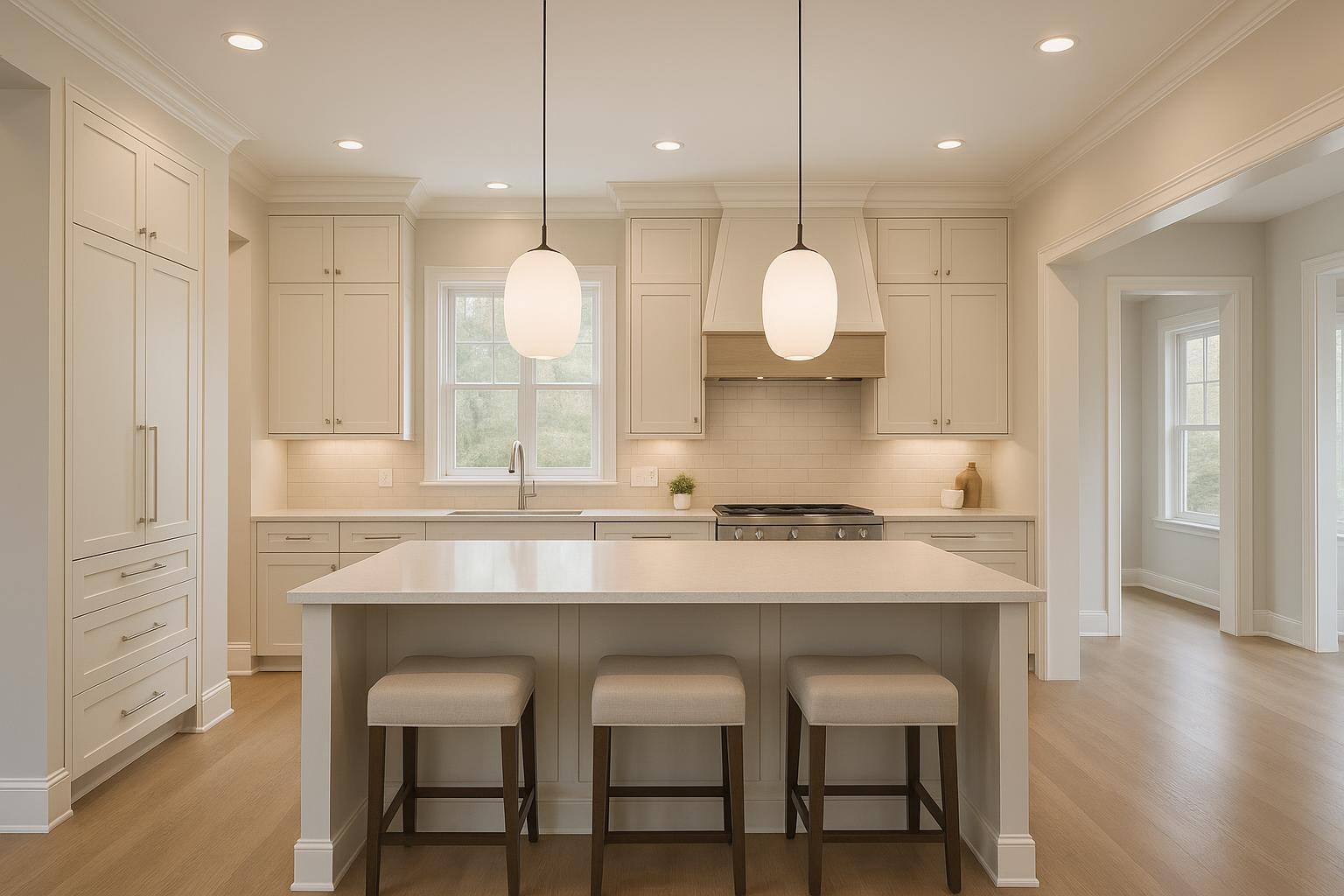
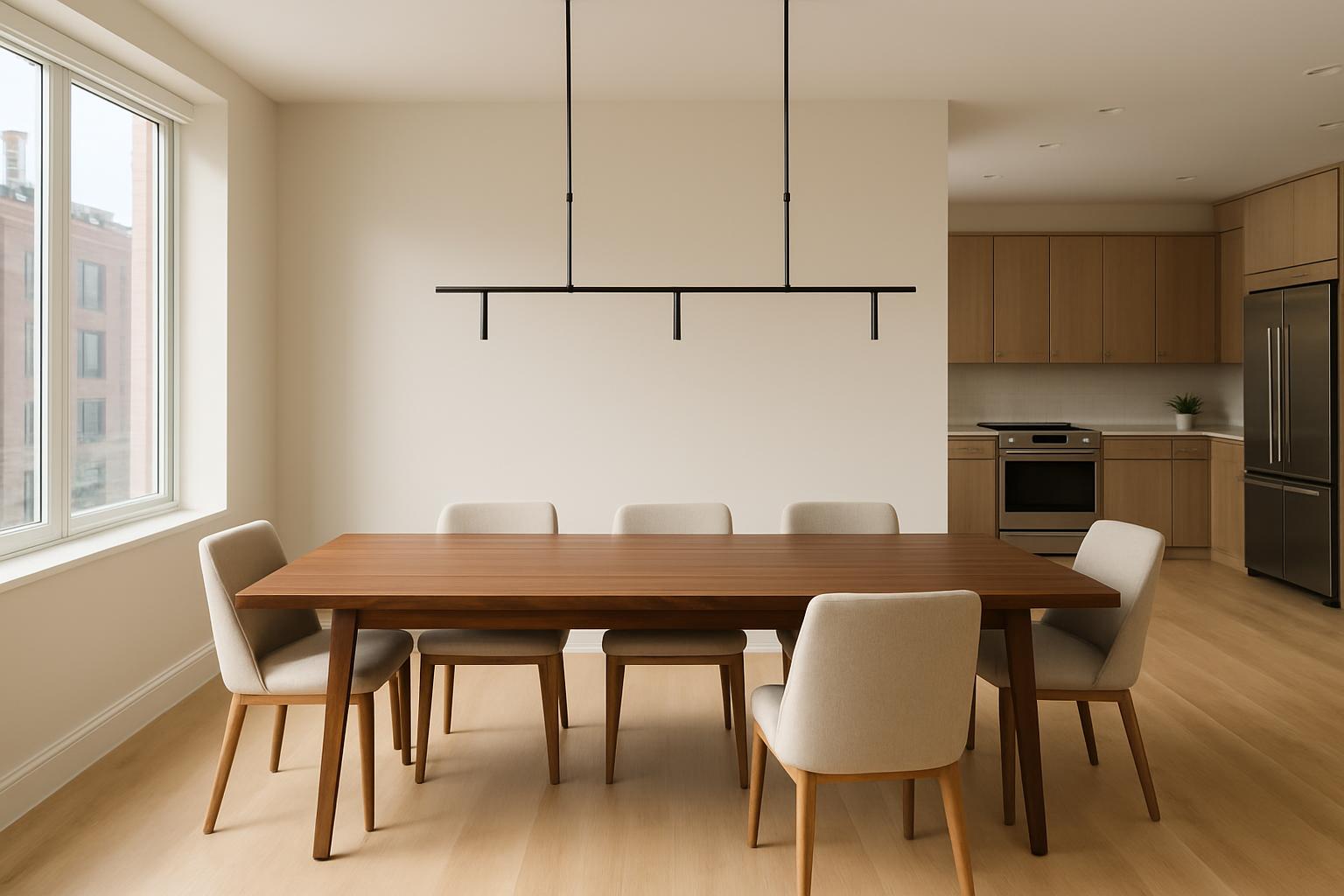
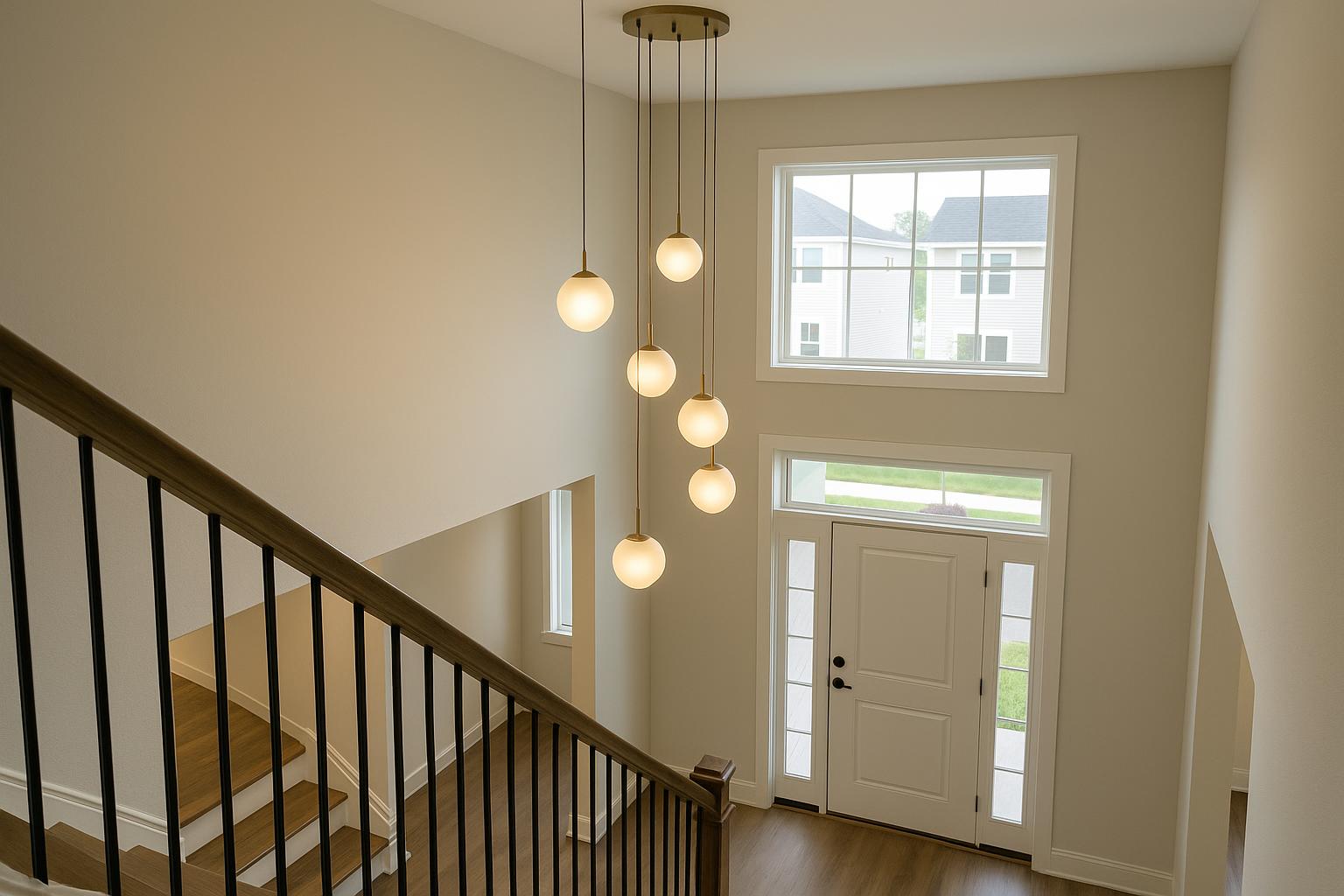
Choose the arrangement according to the shape of the area below. One substantial pendant can give a round table or compact island a clear center. A row can spread light across a long rectangular surface. A cluster can occupy a tall stairwell or entryway while allowing views between individual elements.
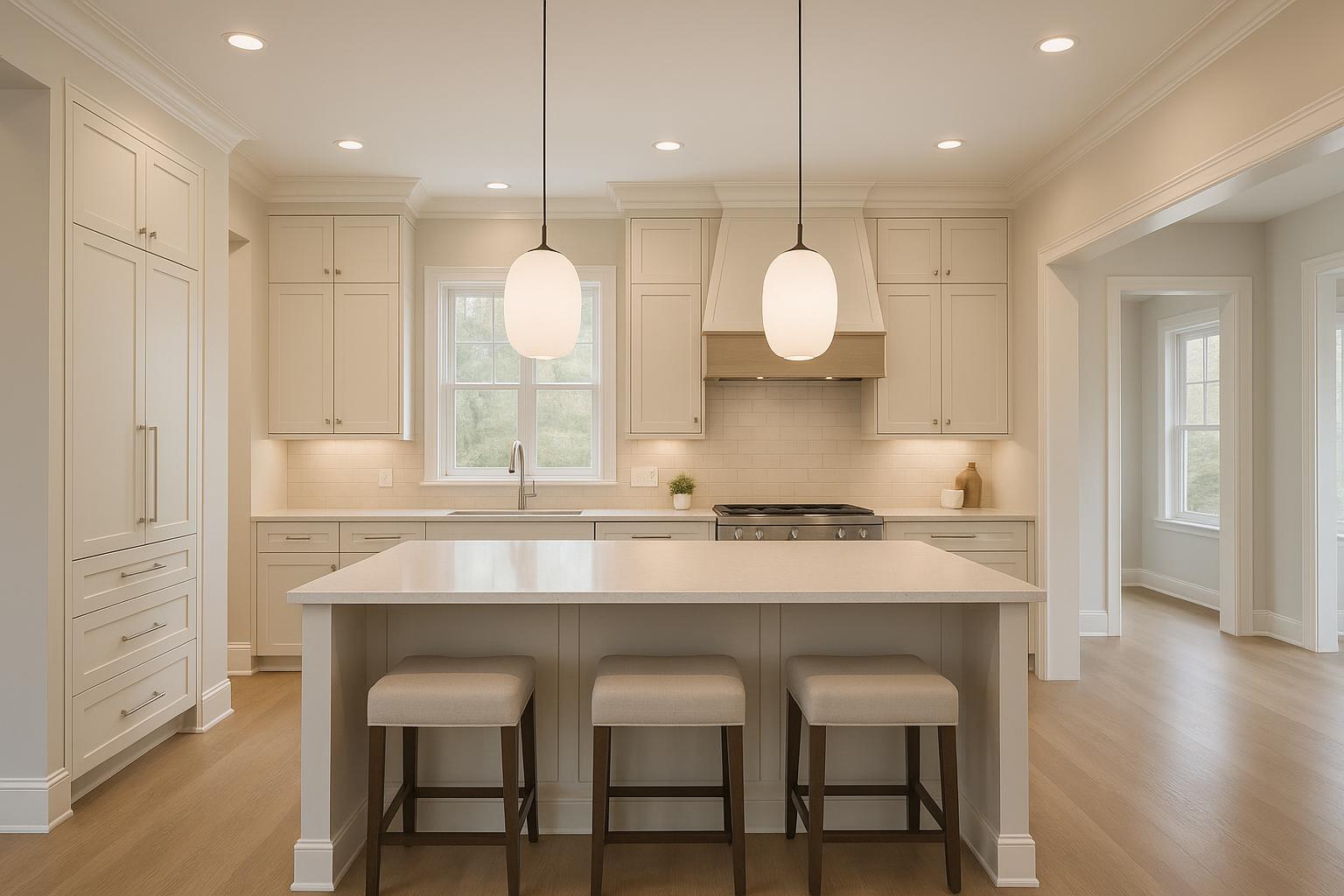
Do not choose three modern pendant lights simply because three is familiar. Two larger fixtures may establish a stronger rhythm over a medium-length island, while several compact pendants may suit a longer counter. Compare the full group with the island rather than evaluating each shade in isolation.
For a row, keep the outer fixtures comfortably within the ends of the surface and check the open space between shade edges. The spacing should prevent the fixtures from reading as either a single congested object or unrelated points. For a cluster, map the highest element, lowest element, and widest spread. Confirm that each drop can be adjusted and that the canopy suits the available electrical box.
Test the Drop From Every Viewpoint
Over a kitchen island or dining table, a common starting range places the fixture bottom about 30 to 36 inches above the surface. That range is a planning aid, not a substitute for testing. A deep opaque shade, unusually tall household members, or a low ceiling may call for a different position.
Cut a paper silhouette or build a lightweight cardboard form in the fixture’s listed dimensions. Suspend it at the proposed height and leave it in place for a day. Sit at the table, stand at the sink, walk through adjoining rooms, and open nearby cabinet doors. For a row, hang separate placeholders so the spaces between fixtures can be judged.
For more consistent lighting throughout the home, the article Make the Ceiling Count: A Flush Mount With Real Presence may also be helpful.
The mock-up should not interrupt conversation across a table or block the view from a kitchen into a family room. It should also reveal whether a visible bulb would sit near eye level. In a two-story foyer, inspect the proposed drop from the lower entryway and upper landing, and consider how the fixture will be reached for cleaning.
Review Materials, Specifications, and Installation
A contemporary fixture does not need to match every metal or shape in the room. Look for one useful relationship instead. A rounded shade can offset straight cabinet lines. A slim black canopy can relate to window frames. Warm metal may connect with hardware without copying its exact finish.

Materials also change with daylight. Clear and polished surfaces can become highly reflective near a west-facing window, while opaque shades hold a steadier silhouette. Textured or diffused glass can remain visually luminous during gray winter afternoons. Consider how the fixture looks when switched off as well as when illuminated.
Before ordering, review the complete width, body height, adjustable drop, canopy size, weight, suspension type, light-source details, dimming compatibility, and location rating. Bathrooms, covered patios, and other damp areas require a fixture rated for the actual conditions. Integrated LED designs also warrant attention to driver access and the manufacturer’s service information.
Once the room test has narrowed the appropriate size, light direction, and configuration, compare contemporary pendant lights with your measurements and mock-up notes nearby. Treat styled photographs as inspiration and the specification sheet as the working document.
Follow the manufacturer’s installation instructions. A licensed electrician can evaluate the electrical box, fixture support, ceiling conditions, wiring, and controls under applicable requirements. The successful pendant will register as a deliberate part of the room without demanding attention every time someone sits down or walks past it.